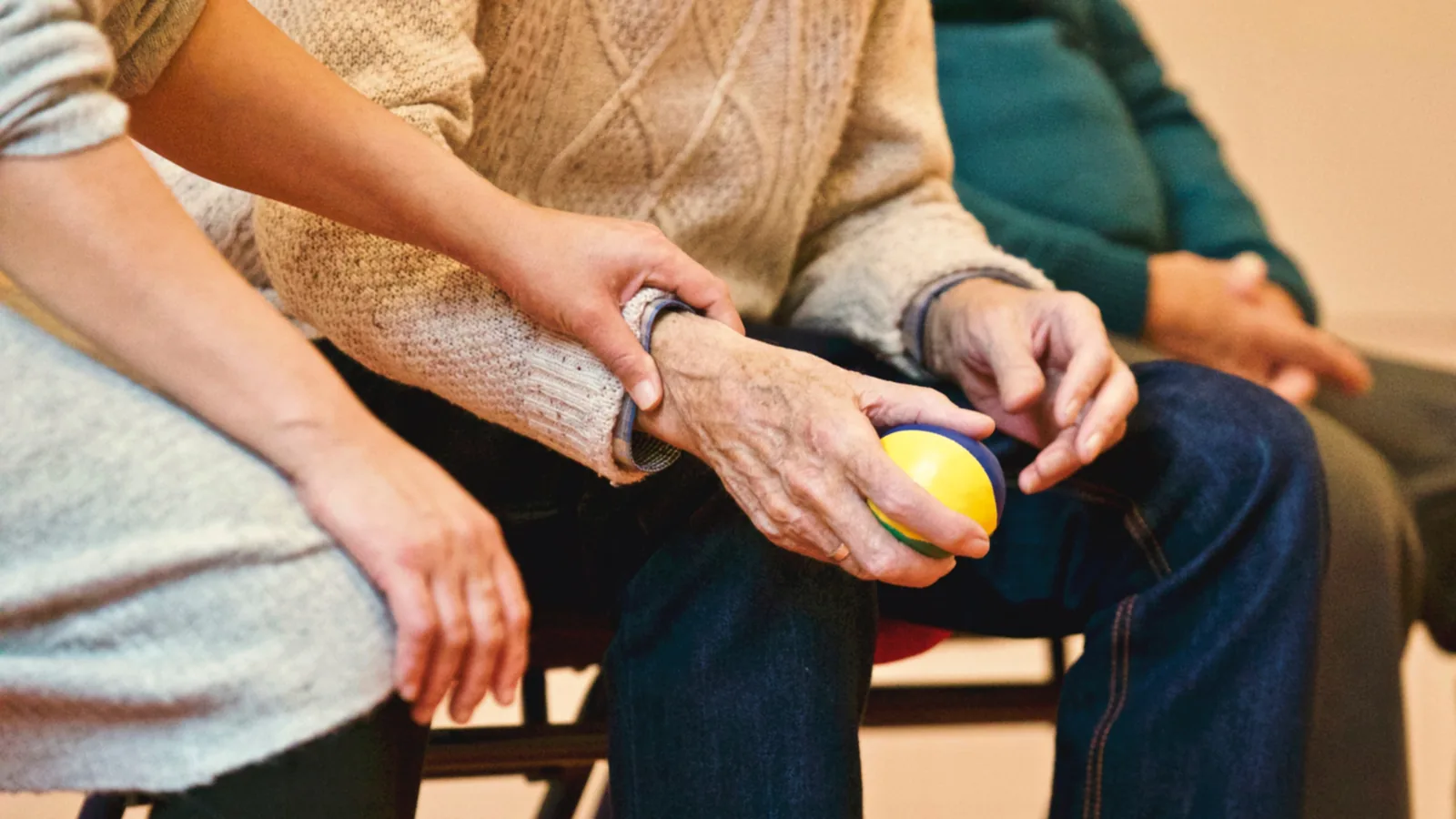
Falls prevention: planning safe, individual support
Preventing falls
By Amy Davis · Originally published 28 November 2018
Ask what is making movement harder for you
Tell your clinician about falls, near misses, dizziness, pain, medication changes and places where you feel unsteady. Explain what you want to do more comfortably, such as reaching the bathroom or getting out into the community. Ask which activities suit you, what assistance is needed and when to stop or seek help.
A program should respond to your circumstances rather than the article’s fixed duration or exercise description. Discuss equipment, the home environment and confidence as well as movement. Healthdirect’s falls information explains assessment and prevention. NDIS therapy funding has separate eligibility and support criteria.
Original article and dated context
Amy Davis is one of Road to Recovery’s team of accredited Exercise Physiologists. Road to Recovery can provide these services in your home or in the community. For more info, click here.
Falls can happen to anyone at any point in their lives; however as we age falls become more and more common, and the risk of serious injury as a result significantly increases. Falls are a major health issue with 1 in 3 community dwelling older adults experiencing at least one fall every year, with even higher rates for those in residential care facilities and hospitals.1 This number is only set to increase as Australia’s population ages, with the proportion of people aged over 65 predicted to increase from 14% in 2010 to 23% in 2050.<sup>2</sup>
Falls are the leading cause of injury-related death and hospitalisation in older Australians. An older adult is 3 times more likely to be admitted to a nursing home after a fall, and over 10 times more likely if the fall caused an injury. Falls are the biggest cause of disability, reduced quality of life and loss of independence in the elderly.<sup>3</sup> This is because falls often result in injuries that have both physical and psychological consequences including loss of mobility experienced as a result of sustaining physical injury, as well as a loss of confidence in their own ability to prevent future falls. As a result, older adults often reduce their physical activity levels, which only increases their risk of a future fall through deconditioning and a further loss of confidence. It is therefore it is important to understand what may cause a fall, consequences of falls and what can be done to prevent falls from occurring.
To balance and walk without concern requires multiple different parts of their body to communicate and respond appropriately. Walking requires freely moving joints, appropriate muscular contraction and strength with appropriate timing, accurate vision and proprioception all at once. As we age these functions can become compromised due to many reasons such as arthritis and stiffness of the joints, age related loss of muscle mass, strength and coordination due to inactivity, poor vision, other medical conditions etc. These changes combined with other factors such as a history of falls, use of psychoactive medications, and other medical conditions significantly increases the likelihood of a fall. The strongest independent risk factors for falls are a history of previous falls, weakness, gait and balance impairments, and use of psychoactive medications.<sup>1</sup>
Contrary to popular belief, falls among the elderly are not inevitable and many falls can be prevented. Some risk factors for falls are relatively easy to change and control, including consulting your doctor about medications and any changes to your health, getting regular eye checks and being conscious of your environment. However one of the most effective methods to prevent falls is structured exercise focusing on improving muscle strength, balance and coordination.
Exercise as a single intervention has been shown to prevent falls in community-dwelling older people<sup>5</sup>, with the most effective exercise interventions identified as group-based programs that included two or more exercise components, individually tailored programs delivered in the home, and community-based Tai Chi programs.<sup>4</sup>
Exercise and Sports Science Australia (ESSA) recommends that older adults should participate in a structured exercise programs that focus on challenging balance through controlled movements with minimal arm support, changes in foot position and controlled movements of the body’s centre of mass. The most effective programs are those that are performed for a minimum of 2 hours each week and are ongoing with continuing progressions. It is important to note that walking on its own will not prevent a future fall, and a successful falls prevention program will be tailored to the individual’s needs and level of falls risk.<sup>6</sup>
[Clickability update, October 2026:
Do not reduce arm support or attempt these movements without an individually assessed plan. Current healthdirect guidance recommends older people see a doctor after a fall even if they feel well. Serious injury or an emergency requires urgent care.
]
It is important to emphasise that these programs not only focus on improving physical capabilities but also assist to build confidence and self-efficacy within adults to truly promote falls prevention among this population.
References
Lee A. Preventing Falls in the Geriatric Population. The Permanente Journal. 2013;:37-39.
Info about falls | Australian and New Zealand Falls Prevention Society [Internet]. Anzfallsprevention.org. 2018 [cited 29 September 2018]. Available from: http://www.anzfallsprevention.org/info/
Jin J. Prevention of Falls in Older Adults. JAMA. 2018;319(16):1734.
Rose D. The role of exercise in preventing falls among older adults. ACSM’s Health & Fitness Journa. 2015;19(3).
Sherrington C, Michaleff Z, Fairhall N, Tiedemann A, Whitney J, Cumming R et al. Exercise to prevent falls in older adults: an updated systematic review and meta-analysis. Innovation in Aging. 2017;1(suppl_1):268-268.
Tiedemann A, Sherrington C, Close J, Lord S. Exercise and Sports Science Australia Position Statement on exercise and falls prevention in older people. Journal of Science and Medicine in Sport. 2011;14(6):489-495.
Clickability editorial update: October 2026
Help record the pattern without taking over
With the person’s agreement, note when falls occur and what was happening beforehand. Bring that information to an appointment and ask how to assist safely. Avoid improvising lifting techniques or encouraging someone to remove a support to prove progress. Ask the professional to explain the agreed response after another fall.
Questions readers ask
Should I copy the balance exercises described here?
No. Ask a qualified professional to assess suitable activities and assistance. Official guidance
Does NDIS funding replace medical assessment after a fall?
No. Seek appropriate health care; funding decisions have a separate role. Official guidance
Find help planning movement that suits you
Describe your mobility goals and compare exercise physiology providers through Clickability. Ask about assessment, falls experience and arrangements for safe participation.