NDIS meal preparation and delivery: read the cost breakdown
Healthy Eating with Youfoodz: Using your NDIS funds to contribute towards meals
By Tristram · Originally published 13 September 2024
Deeper review: 6 October 2026. The deeper review retains the lived experience and explains actual-cost meal delivery checks. Historical percentages and promotional details remain accompanied by corrections.
Work out the food bill and the support bill separately
NDIS meal support separates eligible actual preparation and delivery costs from food and ingredients you pay for yourself. Ask for a written breakdown and check the support fits your plan before ordering. The original product experience below is historical; it is not a current offer or a universal percentage contribution. Read the meal-preparation guidance.
Original article
[Clickability update, October 2026: The percentage belongs to the historical product experience. It is not a current universal claim rule; check actual eligible costs before ordering.]
How can you use NDIS funding to cover meal costs?
[Clickability update, October 2026: Do not apply a standard 70% claim to an invoice. The 3 August 2026 nutrition guideline says funding is based on actual preparation and delivery costs, not a proportion of total meal cost. Ask for food costs to be separated. Read the current nutrition guideline.]
[Clickability update, October 2026: Core funding alone does not authorise every meal purchase. Food and ingredients remain ordinary costs. Check the eligible preparation/delivery component and any plan restrictions first.]
How do you order meals?
[Clickability update, October 2026: An NDIS number does not establish eligibility for every meal order. Confirm the actual support, funding and separated costs before purchase. Current supplier terms and the historical offer have not been verified.]
What was my Youfoodz experience?
Choosing meal delivery after reading this personal story
Compare the meal, the support and your own bill
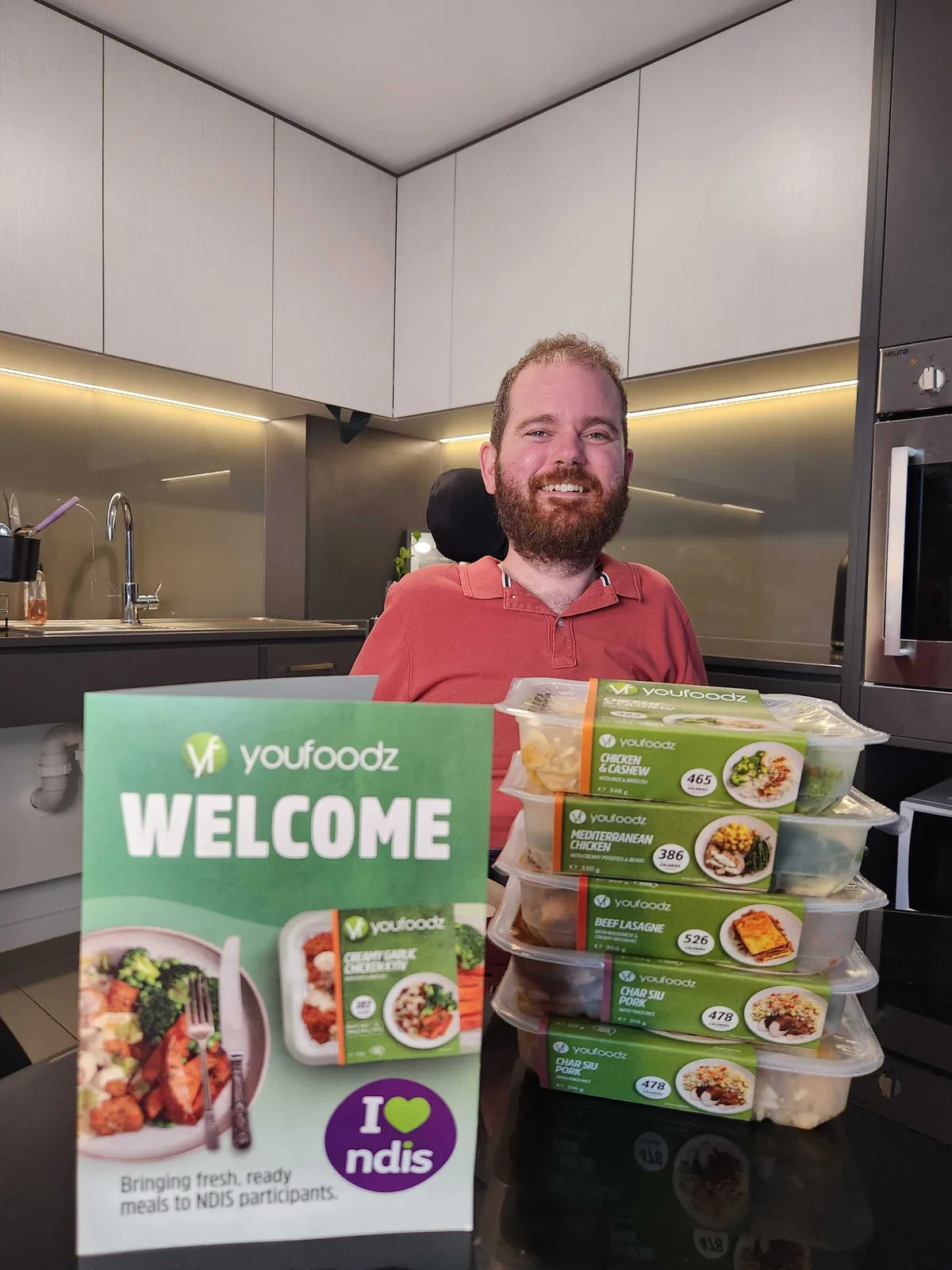
Tristram’s account shows why delivered meals can matter when cooking is difficult. Use that experience to identify what you need: reliable meals, less fatigue, accessible packaging or help during a temporary gap. It is not confirmation that the same supplier, offer or funding arrangement is available today.
Request a written breakdown of ingredients, preparation and delivery. The NDIA’s current nutrition guidance uses actual preparation and delivery costs rather than a percentage of the whole order. Check the support is included for you before ordering. Check the current meal preparation guidance
Compare delivered meals with help to prepare food at home. Confirm invoicing or payment before ordering rather than assuming an upfront payment guarantees reimbursement.
Work out the personal cost before committing
For an illustrative order costing $100, suppose the supplier identifies $40 of ingredients and $60 of eligible preparation and delivery. The personal food bill is $40, subject to checking those actual components and the participant’s plan. This is a calculation example, not a standard split or approved quote. A supplier’s different breakdown needs its own check.
Ask the participant which meals they want and how they will store and reheat them. Check delivery windows, minimum orders, packaging and what happens if an order is missed. If meal support is helping someone develop cooking skills, keep that aim in the arrangement rather than replacing every opportunity to practise.
Agree who places and pays for orders and who follows up a missed delivery.
Make the quote useful to the participant and manager
Show the service period and separate food costs clearly. Explain payment arrangements and cancellation terms before taking an order. A promotional discount is a commercial offer, not a funding decision, and an NDIS number does not settle eligibility.
Ask about dietary and access needs within your service’s competence. A general menu description cannot confirm swallowing safety or replace an individual professional recommendation. Agree how the participant can raise a problem with the food or delivery and keep the response accessible.
Questions readers ask
Does the NDIS pay for ordinary food and ingredients?
No. They are everyday costs, distinct from eligible disability-related preparation and delivery. Official guidance
Is a fixed 70 per cent NDIS contribution the current meal delivery rule?
No. The current NDIA guideline bases funding on actual eligible preparation and delivery costs, separately from food and ingredients. Confirm the support and quote for your plan. Official guidance
Find support for preparing meals in the way you prefer
Describe your disability-related meal assistance needs through Clickability. Compare provider profiles and reviews, then confirm eligible tasks and costs before agreeing.
Find an NDIS provider for meal support · Browse the provider directory