NDIS telehealth: choosing therapy that works for your family
Breaking Barriers: How Telehealth Is Making Therapy More Accessible for Families
By XRHealth · Originally published 12 November 2025
How families can decide whether remote appointments fit
Ask which everyday task the therapy will address and how the clinician will assess it remotely. Discuss the child’s preferences, communication, sensory needs and whether an adult must help during the session. Gaming interest alone does not answer those questions.
Check the first available appointment, equipment arrangements, fees and the fallback if the connection fails. Ask when an in-person assessment would be needed. Compare what you will have to organise at home with the travel you would otherwise make.
Original article and dated context
Accessing therapy and assessments shouldn’t be a struggle, and thanks to telehealth, it no longer has to be. At XRHealth, we’re helping individuals and families experience high-quality care from the comfort of home, removing the need for long waitlists, travel time, or time off work and school.
[Clickability update, September 2026: Remote appointments can reduce travel, but availability depends on the provider. A clinician must check whether remote care suits the person and the task. Read Ahpra’s virtual-care guidance.]
For many families across Australia — especially those balancing work, school, and care responsibilities — even getting to therapy can be a challenge. Regional families often face months-long waitlists, while city families navigate traffic, parking, and time off work or school. The shift toward telehealth has changed all that.
According to the Australian National Audit Office, during the early expansion of telehealth, more than 86 million services were delivered to 16 million Australians across 89,000 providers (ANAO, 2021). This isn’t a stopgap — it’s a structural change to how care is delivered.
[Clickability update, September 2026: The linked ANAO report was published in January 2023 and recounts Medicare telehealth activity and a 2021 announcement. These figures do not measure NDIS or XRHealth outcomes. Read the report.]
The Power of Telehealth
Telehealth allows clients to connect with experienced clinicians via secure video sessions. Whether you’re accessing Occupational Therapy, Psychology, Physiotherapy, or Assessments such as Functional Capacity Assessments (FCAs), Autism (ASD) and ADHD assessments, every service is designed to be flexible and supportive.
[Clickability update, September 2026: The delivery format does not make a diagnostic assessment an NDIS-funded disability support. Clinical diagnosis and health treatment are separate from disability-related functional therapy. See the excluded-supports list and therapy guidance.]
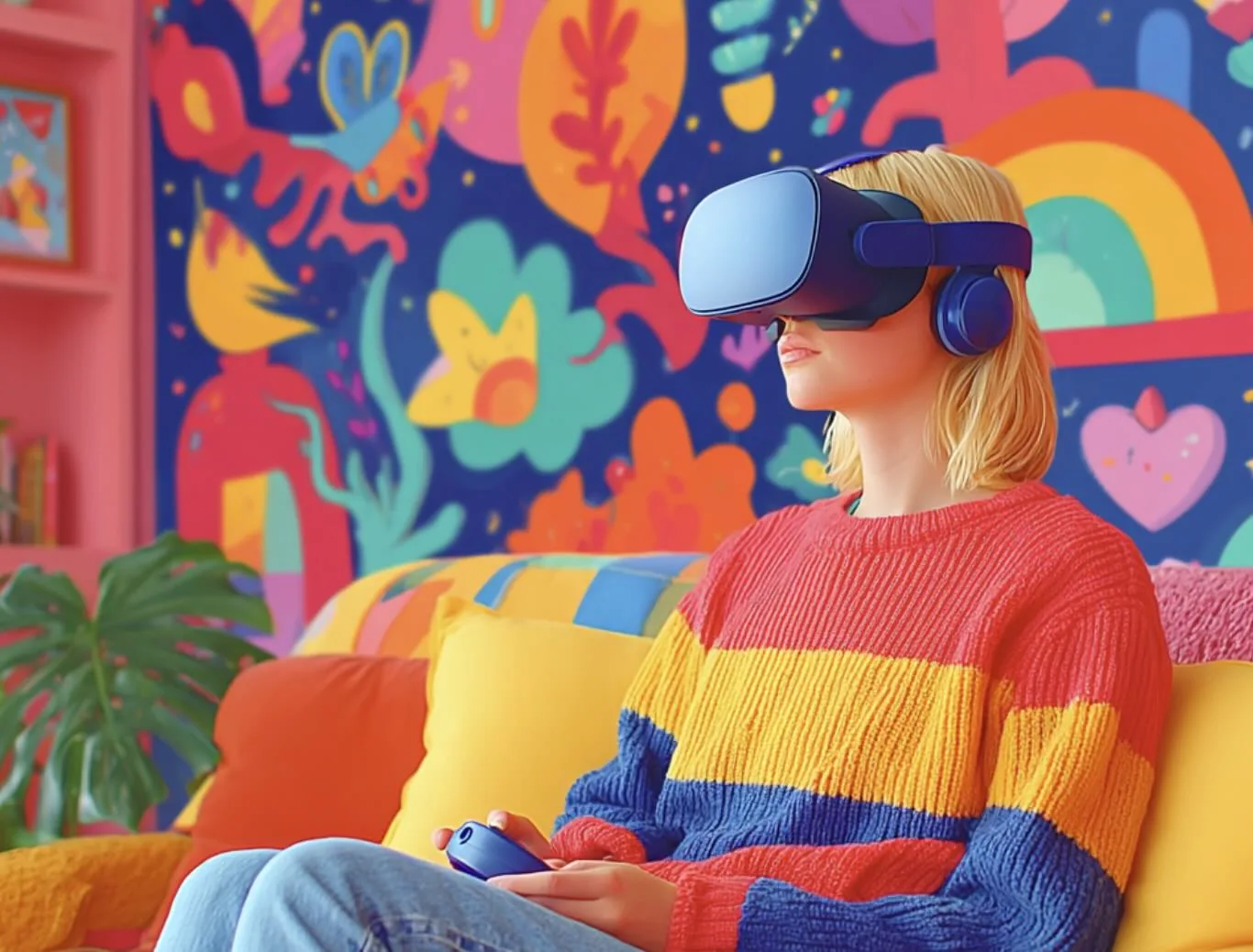
But at XRHealth, telehealth goes beyond a simple video call. Our clinicians use immersive extended-reality (XR) technology — combining virtual environments, gamified exercises, and real-time data — to make therapy more interactive and measurable.
This approach supports measurable improvements across wellbeing, mental health, physical rehabilitation, and functional capacity. Studies show that telehealth outcomes are comparable to in-person therapy for most allied health and mental health services (ScienceDirect, 2024). Participants consistently rate video and XR sessions as effective, with 92 % reporting good or excellent technical quality and 86 % high satisfaction (International Journal of Mental Health Systems, 2022).
[Clickability update, September 2026: The broad comparison here should not be read as proof that every allied health service or VR program is equivalent to in-person care. The specific linked review could not be verified in this standard review. The adjacent 92% and 86% figures come from 26 consumer survey responses about technical quality and overall experience in a regional mental-health service, not VR effectiveness. Clinical suitability remains an individual decision. See guidance on choosing virtual care.]
Families love the convenience, especially when juggling busy schedules. With telehealth, you can log in from home, eliminating travel and making therapy more approachable for teens and adults alike. And for many children or people with anxiety, the comfort of a familiar environment improves engagement and consistency.
After-School Appointments That Work Around You
We understand that many families can’t make appointments during traditional business hours. That’s why XRHealth offers after-school and early evening telehealth sessions, making it easier for children and teenagers to receive consistent care without missing school, and for parents to avoid the stress of mid-day appointments.
This flexibility means therapy no longer disrupts daily life. Whether you’re dealing with traffic delays, a sick child, or school running late, you can still connect from home and stay on track — no missed sessions, no wasted travel time.
It’s small changes like these that make therapy sustainable for busy families. Consistency drives progress, and telehealth keeps that momentum going.
Professional Care, Delivered Remotely
Our AHPRA-registered clinicians are experienced in delivering evidence-based therapy via telehealth. Using immersive extended-reality (XR) technology, sessions become highly interactive, engaging, and tailored to each client’s goals.
Rather than passively talking through a screen, clients might:
Complete guided VR activities designed to improve physical or cognitive skills.
Practice daily living tasks in simulated real-world environments.
Engage in mindfulness or relaxation sessions using immersive, calming visuals.
Between appointments, clinicians can monitor clients’ use of XRHealth VR therapy applications, enabling continuity of care, timely support, and data-informed decision-making. This ensures every client receives consistent, high-quality care no matter where they’re located.
[Clickability update, September 2026: The following account is supplied by XRHealth, with changed names. It is an attributed experience, not independently verified evidence of treatment effectiveness.]
Real-Life Story: Sarah and Ethan’s Experience
Meet Sarah and her son Ethan, 16, (names have been changed) who was diagnosed with ASD and ADHD. Before discovering XRHealth, they often missed in-person sessions due to traffic, sickness, or conflicting commitments. The stress of rearranging appointments often outweighed the benefits.
Through XRHealth’s telehealth sessions, that changed.
Better attendance – Instead of cancelling when Ethan or Sarah were unwell or late after being caught in traffic, he could still connect from home and complete his session without interruption.
Higher engagement – The VR-based activities turned therapy into an interactive experience he looked forward to.
Improved outcomes – Over several months, Ethan’s confidence, focus, and daily functioning improved, proving that telehealth can deliver meaningful, consistent progress.
Stories like Ethan’s are now common. When therapy becomes more accessible and less stressful, participation and outcomes improve — especially for families juggling complex routines.
Why Families Are Choosing Telehealth
Flexible scheduling – Book sessions that fit around work and school hours.
Reduced wait times – Get started sooner without long travel or clinic backlogs.
Continuity of care – No interruptions due to sickness, travel, weather, or distance.
Comfort and privacy – Thrive in the familiarity of your own environment.
Convenience – Access care from home or anywhere with an internet connection.
For families in rural or remote areas, these benefits can be life-changing. Research shows that reduced travel time and flexible access are consistently ranked among the top benefits of telehealth (BMC Health Services Research, 2023).
Common Questions and Misconceptions
“Is telehealth really as effective as face-to-face therapy?”
Yes — numerous Australian and international studies show equivalent outcomes across most allied health disciplines. For many clients, telehealth actually increases consistency and engagement.
[Clickability update, September 2026: The linked regional mental-health study analysed 26 consumer survey responses: 92% rated technical quality and 86% overall experience good or excellent. It did not test XRHealth VR effectiveness. Read the original study.]
"Isn’t it complicated to set up?”
Not at all. XRHealth’s secure VR telehealth sessions are set up by our experienced team, and support is provided as needed. To attend telehealth consults, you simply click the unique link emailed to you the day before your appointment. The headset is sent to your home preconfigured for you. You just need to turn it on and connect to Wi-Fi.
“What if my child struggles to focus online?”
The immersive nature of XR technology makes telehealth engaging — particularly for children with attention or sensory needs. Our clinicians tailor activities to your child’s interests and energy levels, ensuring therapy feels empowering, not exhausting.
The Broader Impact: Accessibility and Inclusion
Telehealth isn’t just about convenience — it’s about equity. It levels the playing field by bringing high-quality therapy to families regardless of geography or mobility.
The NDIS recognises telehealth as a valid and effective service delivery model, supporting participants to access allied health services remotely under most plan types.
[Clickability update, September 2026: Remote delivery does not approve a therapy, diagnostic assessment or headset purchase. The support must meet the applicable rules and fit your plan. Check therapy guidance.]
By reducing missed appointments and increasing engagement, telehealth also makes therapy more cost-effective for providers and participants alike. Every saved commute, every session that doesn’t get cancelled, translates to better outcomes and stronger continuity of care.
Looking Ahead
As technology evolves, XRHealth continues to innovate — combining clinician expertise, data insights, and immersive tools to deliver therapy that fits into daily life. From functional assessments to mindfulness sessions, XRHealth’s blended telehealth-plus-XR approach is helping participants, families, and support coordinators build sustainable therapy routines that truly work for them.
Final Word
At XRHealth, we believe healthcare should fit around your lifestyle — not the other way around. By breaking down barriers of distance, time, and accessibility, telehealth makes therapy simpler, smarter, and more sustainable for Australian families.
Your wellbeing shouldn’t depend on traffic, travel, or time off work. With XRHealth, it doesn’t.
Meet your clinician – Choose from Occupational Therapy, Psychology, Physiotherapy, or Assessment pathways.
Get started from home – Enjoy the flexibility of sessions that work for you.
Visit XRHealth Australia to discover how telehealth can make quality care easier than ever.
Clickability editorial update: September 2026
What participants can agree before the first online session
Tell the clinician how you communicate and who you want present. Ask what information the platform records, who sees it and whether you can choose another format. Confirm costs and funding before accepting equipment or a recurring booking. Ahpra explains what you can expect.
Questions readers ask
Does a telehealth format automatically make therapy NDIS-funded?
No. The actual therapy must meet the funding rules and fit your plan. Equipment purchases are a separate question. Official guidance
Do the cited satisfaction figures prove VR treatment works?
No. The regional mental-health survey measured experience and technical quality, not XRHealth VR treatment effectiveness. Official guidance
Find therapy that fits your access needs
Describe your therapy needs and preferred appointment format through Clickability. Compare provider profiles and reviews, then ask about suitability and availability.