Participant-led service quality: lessons from the Q-Team
The Q-Team: Quality assuring services
By Kittie Vicious · Originally published 16 November 2016
Original article and dated context
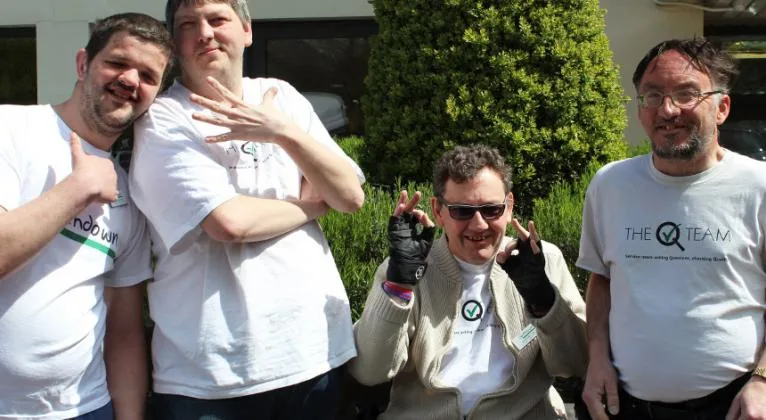
We are Southdown Housing Association, East Sussex, UK! We have a very valued team of people who use our learning disability services, who have been trained and supported to undertake quality checks of our residential services. Called the Q-Team, their aim is to help others who use our learning disability services say what they think is a ‘quality service’, what is most important to them, and how they like to live their lives.
The Q-Team is made up of six people that use our services. They are a diverse group of people with varying support needs, skills and knowledge of services. That knowledge is growing with each piece of Q-Team work that they complete.
Involving clients as quality checkers ensures that their knowledge and experience of living within a service provides us with a perspective that complements other checks, such as Care Quality Commission audits, giving us a full picture about the quality of our services.
The Q-Team volunteers are experts by experience. They work together to go and visit our supported living and registered care homes to speak directly with the clients who live there. The team interview clients and sometimes staff to ask lots of questions about all areas of someone’s support. The team have to use their observational skills and look out for evidence whilst they are on their visits, especially the services where they may be visiting people who are non-verbal and unable to take part in the spoken interviews. The team spend time with clients and watch them interact with staff and each other to try and report back on whether they feel the service is good quality for the people living there.
The team write a report for the service manager and also an easy-read version for the clients. They also film a video report to try and ensure all clients can access the information they found when visiting the service. After 1 month, the team check in with the manager to find out how they are progressing with actions highlighted at the visit and after 3 months the team present the report to our executive team and our board members, updating them on the changes made at the service as a result of their work.
“I am passionate about helping people with learning disabilities. No person with a learning disability is any different from anyone else and should be treated equally. The work I do for the Q-Team is very important to me, I like helping people to get what they want out of their lives. Being a volunteer has opened many opportunities for me. I love it” – founding Q-Team member, Andrew.
The team loved meeting Jenna from Clickability and think that the website sounds very useful and hope the work of the Clickability team spreads across Australia
The Q-Team know how important it is to have good quality services and also how difficult it can be as a person with a disability to find out what is available to you and to also feel confident to speak up when you do not get the level of service you would expect.
The Q-Team volunteers say, don’t be afraid to be honest about the service you have received. You are paying for that service and deserve to be treated well. By reviewing services you can help others get good support, highlight those who need to perform better and also say well done to the providers who are doing a top quality job!
Kittie Vicious
Kittie is the project coordinator for Southdown Housing Association’s Q-Team. To see the Q-Team on film explaining what a visit is like, please click here.
Clickability editorial update: October 2026
Give participant feedback a route to action
Ask people how they want to take part and offer ways to communicate beyond a spoken interview. Agree what will be recorded, who will see it and how privacy will be protected. Observation can add information, but do not assume it fully represents a person’s preferences when they use another form of communication.
Choose a specific issue, record the action owner and tell participants what changed. Offer a safe route for disagreement or complaints that does not depend on joining a feedback team. NDIS governance and quality-management standards describe relevant obligations for providers to whom those standards apply. The Q-Team’s schedule is an example, not a universal timetable.
Ask what will happen after you give feedback
You can ask for an explanation in a format that works for you, including who will respond and when you will hear back. You do not need to become a volunteer quality checker to raise a concern about your own service. If a group project asks for personal information, decide what you are comfortable sharing. The NDIS Commission’s complaint information explains an external route for concerns about NDIS services.
Does a participant quality team replace an NDIS audit?
No. It can contribute feedback but does not replace applicable audit requirements.
Compare providers who listen to feedback
Read reviews and ask potential providers how they respond to concerns. Use Clickability to find services that fit your needs, then confirm their feedback arrangements directly.