Support work and companionship: connection with boundaries
Why everyday people make the best caregivers
By Jessica Gerrie · Originally published 8 March 2017
Original article
I would like to share a picture with you. It is a picture that I often have in my mind. It is of two individuals hand in hand. These two individuals are unique and completely individual. They are different in many ways, they look different, they think differently and they even differ in their intellectual and physical capacities. One may be standing, and the other sitting in a wheelchair. Although different in many ways, they are walking (or rolling) together, side by side. I believe this picture is a very important one. It is a picture of everyday mainstream people in connection with people who have a disability.
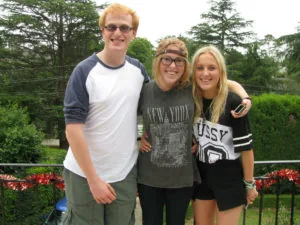
Before I go any further, let me introduce myself. I am a triplet. I grew up with two others my age. A brother and a sister. My brother, Ben, one third of my trio, was born with mild Cerebral Palsy, which means he has some limitations in terms of his physical abilities as well as intellectual capacity. As we entered early high school he was bullied and socially marginalised, before he moved to a co-educational secondary college that accommodates students with a wide range of disabilities. Although my sister and I do not have a disability we innately both feel the effect of living with a disability, being the two other thirds to make up the whole of our triplet. To some extent we are able to understand what it means to grow up and live with a disability. And we are able to see that Ben has beauty to offer in many ways that the two of us could never offer; in fact we simply fall short.
Growing up with this experience gave me a special passion that led me to pursue work with “Home Care Heroes” as an everyday person. Since entering this field of work, in which I get to interact with different individuals with various disabilities, I have thought a lot about the difference between being defined as an “everyday person” as opposed to a “disability support worker” or “caregiver”. Everyday people make the best caregivers because they don’t merely meet the need of providing care, they go one step further and focus on the individual as a whole, and that individual’s need to be accepted and valued.
[Clickability update, October 2026: This is the author’s view. A worker’s relevant skills, responsibilities and boundaries still matter. The NDIS Code of Conduct applies to NDIS providers and workers, including expectations for safe and competent support.]
This connection, which I am painting a picture of, is not a one-sided relationship. Rather it is mutual. Just as a person with a disability has much to offer, so too does an everyday person in mainstream society. One party may be able to teach the other to live more fully in the moment. To laugh at the simple things. To look at something in life from a different viewpoint to what the other is used to. To have fun and forget about what others may think. The other party may be able to teach certain skills for everyday living. Like how to pay for their own takeaway coffee. To understand more about how to connect socially. To follow social cues of when to be loud or when to be silent.
Both parties have a lot to offer. Both benefit from each other. Both are impacted by spending time together. They learn life skills, share life experiences and build a friendship that provides social acceptance.
This connection is why everyday people make the best caregivers. Individuals with a disability don’t need to be treated as a ‘subject’ of care. Yes, they need quality support and excellent care to help them get through everyday tasks. But they don’t just need to be fed dinner. And they don’t just need to be driven to their doctor’s appointment. They don’t just need a “caregiver”. They also need to be individually valued and accepted for who they are. Often caregivers can skip over this crucial key, as their job description is to just provide care and support. However, an everyday person’s job description is to provide care whilst also forming a friendship that values the individual. And I personally know that my brother would much prefer an everyday person who he can call his friend, than to have a caregiver.
I think a very important question remains. Are you willing to break down the walls of social norms and accept the person in your community with a disability as a unique individual that can benefit you? Are you willing to be the everyday person they need? And are you willing to let them be the new or different perspective that you need? Hand in hand we will go.
Jessica Gerrie
Jessica works as an “everyday person” for Home Care Heroes, a social movement that matches caregivers with those who need assistance. To find out more on how to find or become a Hero, please click here.
Clickability editorial update: October 2026
Choose a relationship that fits the support you want
Tell a worker whether you want conversation, practical assistance or a mix of both. Discuss tasks, hours and communication, including what you want kept private. You can value a warm connection without feeling obliged to provide emotional support or friendship in return.
When comparing support work providers, ask about skills and how concerns are handled. The Code of Conduct sets expectations beyond being friendly. Agree how a change of worker or an ending to the service will be managed.
Be personable while keeping the role clear
Get to know the person’s interests and preferred assistance without assuming they want a friendship. Let them set the pace of conversation and avoid making participation depend on your idea of acceptable social behaviour. Follow the agreed tasks and recognise when specialist skills or advice are needed.
Keep personal information confidential and be clear about contact outside agreed hours. Your own need for companionship should not shape the service. Use Code of Conduct expectations alongside the support arrangement and appropriate supervision.
Questions readers ask
Is friendliness enough to establish safe support?
No. Relevant skills, responsibilities and competent practice matter. Official guidance
Must a participant become a worker’s friend?
No. They can choose the relationship and boundaries that suit them.
Find a support worker who fits your day
Describe the tasks, interests and communication you want through Clickability. Compare reviewed and rated providers and ask about skills and boundaries.