Accessible filmmaking: a historical Movie Makers story
It’s lights, camera, action!
By Leah Burgess · Originally published 26 July 2017
Original article
Mambourin’s Movie Makers program has come a long way since it began four years ago. Movie Makers – one of Mambourin’s largest creative programs – started out with six people and a second-hand camera. Today, a group of twenty eager participants work together to create a range of movie material. These days they use a backlot they’ve created at Mambourin’s Melton Centre, create shorts and full features, and they’ve also secured some pretty mint gear over the years!
Movie Makers began as a vision of music therapist, Jeanette. Her idea became part of a continued push to innovate programs that were relevant, in this case for people who enjoyed digital technology and the creative arts. Mambourin Services Manager, Vicki O’Neill explains:
“A lot of customers love film and television. And more people of all ages were showing a lot of interest in digital technologies. Many people had begun to bring iPads to our programs, a lot of people had Smart phones with cameras they used to take images, but also video. So the idea was to create a film crew or movie group – a program that would tap into this interest with visual technology but was also related to our successful expressive arts programs.”
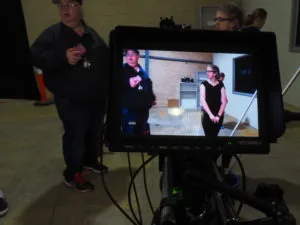
Now, with the expertise of two facilitators, Brendan and Pauline, the Movie Makers group gives people an opportunity for people to gain an understanding of filmmaking, digital media, and an introduction to the production process. If anyone in the group is interested in being on the other side of the camera, they are able to act in one of the group’s productions too.
We asked Charlie who has been with the group for a year what he liked about film and movies in particular,
“I like Batman. The Dark Knight is my favourite film. But also Adam West as Batman in the TV series. He is fantastic. I do enjoy acting too.”
Another program participant, Barbara, shows me her own handy camera which she has purchased since starting the program a while back.
“I love filming,” she says as she shows me her camera. “I’ve always enjoyed it”.
Facilitator Pauline said that her and Brendan were initially taken aback by the program’s popularity. Their first gala awards event was a complete sell-out. The pair spent months tirelessly fundraising for the night, hiring limos and a red carpet to give it a real Oscars feel. The group were astounded at the reception they received which included a lengthy standing ovation at the end.
They are looking to have another event soon when they can find the time. But more importantly, they’d like to win some awards.
“We can shoot pretty high quality but film gear dates very quickly. And what we what we use is not like what you need for an award winning short,” says facilitator Brendan, who edits and directs the group’s material. “But we’ll see what happens.”
The group’s full-feature production for 2016 was a comedy meets horror of the ghoulish kind. The Visitor, which premiered at Altona’s Civic Centre in Victoria, is a tale of a vengeful ghost who runs havoc in an old hospital. “Something strange lurks in the shadows and plays tricks with the building’s new occupants… are they going mad or are they just imagining things?’ reads the film’s synopsis.
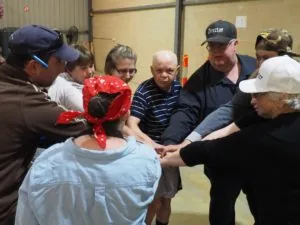
“We are Movie Makers! We are professional! Let’s make Movie Magic!” is the groups rallying cry, which they say each session before filming starts. With a new production in the works, there’s a lot of work to do on set. But with all hands on deck, the group’s movie magic looks well underway.
Leah Burgess
Mambourin is a disability services provider located in Melbourne, Victoria. It offers flexible support solutions that empower people to enjoy life. We have a huge number of interactive programs to choose from and offer convenient transport between sites. If you’re interested in supported employment opportunities we have an award winning facility in Derrimut, we also provide training opportunities for VCAL students with a disability.
Clickability editorial update: October 2026
Choose the part of filmmaking you want to explore
Ask about acting, filming, editing or another role that interests you. Check how communication, equipment, physical access and pacing will work. You may enjoy the activity without wanting your image or work published, so discuss recording and screening consent before joining.
Ask about the current program, costs and cancellations. Separate ordinary activity charges from any disability support proposed under current NDIS support rules. An old provider feature cannot establish funding for your participation.
Give people real creative choices and publication control
Explain the available roles and adapt participation without assuming everyone wants to act on camera. Agree how recordings and names may be used, including publicity and later screenings. Review consent when the intended audience or purpose changes. Evaluate the program through participants’ experiences as well as productions and awards. Rights standards provide a relevant reference for privacy and choice.
Questions readers ask
Is filmmaking automatically a therapy support?
No. Clarify the actual service and applicable funding criteria. Official guidance
Find assistance for a creative activity you enjoy
Describe the practical support you want through Clickability. Compare support workers and discuss access, communication and your preferred creative role.