Disability, beauty and personal style: Emma’s perspective
Beauty and Disability: Finding Femininity
By Emma Gaffey · Originally published 13 May 2015
Original article
Emma Gaffey is a disability advocate, stylist, world traveller and survivor of brain injury and stroke. Most of all, she’s a writer.
By definition, femininity is a set of attitudes, behaviours and roles associated with and portrayed by women. And sometimes, it’s the “superficial” things like hair, nails, make up and clothes that determine whether a woman feels feminine. So having a mandatory style overhaul because of my stupid disability was kind of hard to adjust to.
Living with a disability can mean that your body is scrutinized and controlled by others, or restricted by your circumstances. My long hair had to be removed multiple times for surgery. Now it’s grown back, mysteriously white blonde and not brown like it was before :) It frustrates me every day that I can’t tie it up (if anyone has tips for tying a bun or a ponytail with one hand, please share!).
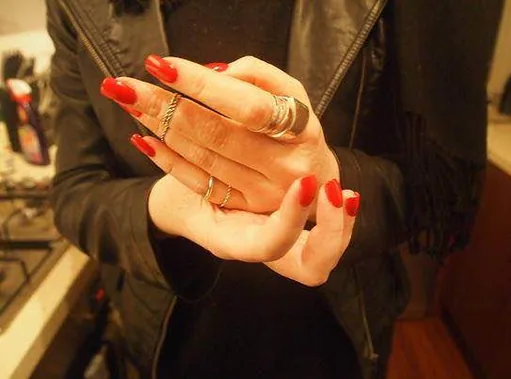
From hair to nails. Now, my right hand is “the claw”. That’s how I’ve lovingly referred to it for years. However it’s not so claw-like since my most recent surgery. They inserted a metal plate running from my elbow to my wrist, then put pins into the joints of my fingers to stop them clawing (Sometimes I beep at airports. Last year when flying out of Brisbane the female security guard actually said, “Next time, I recommend you not have so much metal on you”. NOTE TO SELF – cut off arm, remove resin plate from skull and don’t forget my passport. Easy, right?).
But seriously I think a woman’s hands, fingers and nails can say a lot about her. Not everyone is amazing at applying nail polish on, I know. But it’s annoying when you actually can’t even try to do your nails yourself. For years, I had to wait until a steady-handed friend came over and then casually drop into the conversation “While you’re here, would you mind painting my nails?” That gets tiresome after a while. So just before I moved to Melbourne, I started getting my nails done. Acrylics on my left hand, just a manicure and polish on my right. $20 a month to make me feel a bit more feminine? Yep, done. Some girls have their heels, I have my nails.
You guys might be thinking: is she serious? Of all the issues facing women with disabilities, she chooses to talk about her hair and nails? But the interplay between beauty and disability is an important issue that the health care and disability service industries never consider. Beauty and disability aren’t meant to go together. But they can, they should and they do.
From the moment I could make decisions, I wanted to regain control over my appearance. The simplest things could make a difference. I chose which colour gym pants to wear to rehab (and the corresponding hat). If I applied mascara, I could shift the focus to my eyes rather than my shaved head. And so what if I was in a wheelchair? I could still wear a little black dress!
Girls will be girls and ladies will be ladies – the rules of style and beauty don’t go out the window if you’ve got a disability. Everyone you encounter on your recovery journey has the same goal, to get you back to what you once were – speech, mobility and general motor skills. Feeling beautiful and feeling confident, whatever it takes to achieve that, is just as important.
Clickability editorial update: October 2026
Decide what feeling like yourself means to you
You might care about painted nails, a particular outfit, a simple routine or something entirely different. Identify what you want help with and what you prefer to do yourself. Assistance can support your choices without someone else setting a standard for your appearance.
When discussing support with daily routines, separate the assistance you need because of disability from the cost of ordinary products or appointments. Check current NDIS support rules rather than assuming everything important to your confidence is a funded purchase.
Ask before helping with appearance or grooming
Confirm the person’s preferences, privacy and consent before touching their hair, clothing or body. Discuss the task and the help wanted instead of deciding what looks feminine, tidy or attractive. A person’s appearance is not a measure of their progress or willingness to recover.
Work within your role and agreed support arrangements. The NDIS Code of Conduct provides context for respectful assistance. If the task needs skills or equipment you do not have, discuss a suitable way forward rather than improvising on the person’s body.
Questions readers ask
Does everyone need beauty routines to feel confident?
No. Preferences differ and should be chosen by the individual.
Are ordinary cosmetics automatically NDIS-funded?
No. Check the current support rules and distinguish everyday purchases from disability-related assistance. Official guidance
Find help with the routines you choose
Tell Clickability what getting ready involves for you and the help you want. Compare reviewed and rated support providers who can discuss your preferences.