Home cleaning and COVID-19: read the early advice carefully
COVID-19: 10 tips to clean your home
By Raqy · Originally published 4 June 2020
Original article and dated context
As Amari Services’ Customer Happiness Manager, Raqy would love to share her top cleaning tips to keep you and your family safe at home. Please share your cleaning best practices here too!
The spread of the Coronavirus around the world has put everyone in an indefinite state of quarantine. Now that countries are in lock-down and with many people still stuck at home, there has never been a more important time to ensure we pay attention to cleanliness, to to keep our families safe.
As an NDIS provider that has the responsibility to ensure we keep homes clean and COVID19-free, we’ve scoured every resource we could find to give you 10 tips to clean your home.
1. Wash your hands
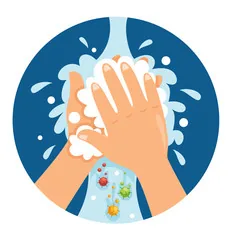
The most obvious Coronavirus disinfection tip is to wash your hands after you cough, sneeze, touch your face, use the restroom, or are about to leave one place for another. You should wash your hands when you leave and return from the grocery store, for instance. The World Health Organization has detailed instructions (which we’ve all seen in meme form) on how to properly perform the 20-second hand wash.
[Clickability update, October 2026: The DIY disinfectant suggestion is not a verified safe recipe. Use an appropriate labelled product and follow its directions. Government cleaning guidance explains that effectiveness depends on correct preparation, use and surface contact.]
2. Disinfect your house
It is a common mistake for people to think that cleaning their house is enough. House disinfection is a different thing. Cleaning is about removing contaminants from a surface. Disinfecting is about killing pathogens. There are a lot of disinfectants available in the market and the internet has numerous DIY disinfectants that are safe for the environment.
3. Target high-touch surfaces
COVID19 is capable of living on surfaces such as cardboard for 24 hours, but up to two or three days on plastic and stainless steel. Which is why it is imperative that we clean and disinfect high-touch surfaces that we often forget like:
Mobile phones and other gadgets
Doorknobs
Faucets and faucet knobs
Light switches
TV remote controls
Game controllers
[Clickability update, October 2026: Routine grocery disinfection is not supported by this claim. Food Standards Australia New Zealand reports no evidence of catching COVID-19 from food or food packaging. Use normal food hygiene rather than treating food with household disinfectants.]
4. Wipe down your groceries
Admit it, this tip is mostly taken for granted. But because the virus can attach itself to any surface, make sure that you wipe down and disinfect all cans, jars, cartons, etc. that you buy from the grocery. Coronavirus disinfection isn’t just with where we live, but also with what we eat.
5. Clean and disinfect the floor
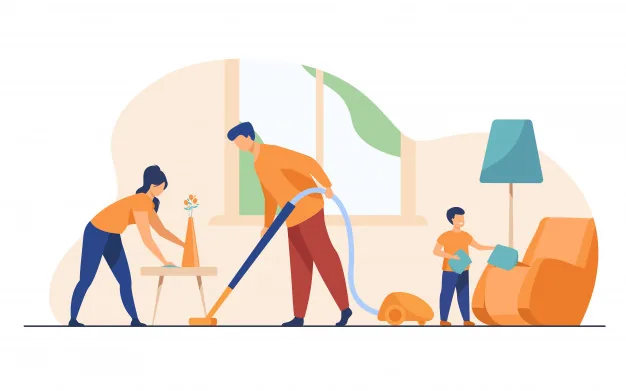
When it comes to house disinfection, as important as it is to clean the high-touch surfaces of your home, you must NEVER forget the floor. This is imperative especially if you have children in the house who lie or crawl on the floor and leave their toys around. Remember that vacuuming won’t cut it.
6. Clean your AC and Air Filtration system
Air quality is important and your home’s air conditioning and heating system is a huge part of maintaining a clean home. With the threat of the coronavirus and how it easily spreads through the water molecules in the air, air quality is important now more than ever, and your home’s air conditioning, heating and filtration system is a crucial part of keeping your home safe from life threatening organisms! Think of why we are all asked to wear masks nowadays, it is to filter air, right? It is the same for our homes!
[Clickability update, October 2026: Follow the device manufacturer’s cleaning instructions. The alcohol concentration in the original text is not a universal instruction for every screen, coating or electronic device.]
7. Disinfect your devices
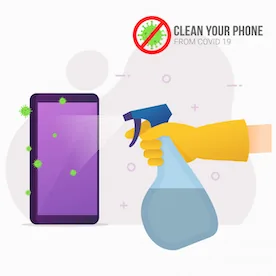
Almost everyone is attached at the hip with the phones nowadays so it totally makes sense to also regularly disinfect your phone. But not just that, remember to disinfect your tablets, laptops, smartwatches, etc. You could use disinfecting wipes or alcohol solution (at least 70%) and make sure you get every nook and cranny of your device.
[Clickability update, October 2026: The statement that cold water does nothing and the universal towel advice below are too absolute. Follow fabric and laundry-product directions and any relevant infection-control advice for the circumstances.]
8. Wash your clothes in warm water
Cold water isn’t going to do anything to kill germs, so make sure to run your laundry on warm (or hot even) for the time being. If you’re collecting laundry in a linen bag, you should also throw that in with your loads as well. If you suspect someone in your house might be infected, put their laundry in a separate trash bag and only handle it while wearing gloves.
9. Change your towels often
Don’t use and reuse towels during this time (even hand ones), as the virus can easily live in the fibers. Your best bet is to use towels only once after a bath or shower and use paper towels when drying your hands. Another option is to dedicate a hand towel for each individual family member just to be safe.
[Clickability update, October 2026: Do not treat the original bleach ratio or one-minute contact claim as a universal recipe. Follow the chosen product’s label and safety instructions. Government cleaning guidance requires the correct preparation and use for the disinfectant.]
10. Use the right cleaners
Not all cleaning agents are effective in killing the virus. The CDC recommends using a diluted household bleach solution or an alcohol cleaning solution with at least 70% alcohol. Hydrogen peroxide is also effective, but it needs to sit on the surface for at least a minute to kill the virus.
Here’s a full list of cleaners you can use to kill the coronavirus:
Bleach solutions (5 tablespoons of bleach per gallon of water).
What won’t work for Coronavirus disinfection? Vodka, homemade hand sanitizer, or vinegar. (That last one won’t smell great either).
Even if you or a household member isn’t sick or showing symptoms, exercising caution right now is critical. You don’t need to be an expert on cleaning but if you feel that you need extra help, hiring professional cleaners is the way to go. What’s important is that you take proactive steps to keep your household clean and sanitized, and that could be what keeps your loved ones safe, healthy, and virus-free in the long run.
Clickability editorial update: October 2026
Agree on cleaning that fits your home and needs
Tell a cleaner which tasks you need assistance with, the areas that matter most and any access or communication requirements. Ask what products they will use and how the work will be carried out. A promise to make a home “virus-free” is not a meaningful service guarantee.
For disability-related help, compare NDIS cleaning services and confirm the service and funding arrangement before booking. Cleaning is only part of household hygiene; use current health information for COVID-19 concerns rather than relying on a dated cleaning list.
Use the actual instructions, not a generic internet recipe
Check the agreed task, the product label and the surface or device instructions before starting. Clarify anything missing with your supervisor. Do not substitute a recipe from the historical article for the service’s approved procedure.
Explain the work to the person and respect their preferences. Hand hygiene remains relevant, but avoid overstating what surface cleaning can achieve. Record any issue that prevents the agreed task from being carried out safely.
Questions readers ask
Do I need to disinfect every grocery package to prevent COVID-19?
Food Standards Australia New Zealand reports no evidence of catching COVID-19 from food or food packaging. Follow normal food hygiene. Official guidance
Can a cleaner guarantee a COVID-free home?
No. Cleaning does not provide that guarantee.
Should I use the original generic bleach recipe?
Use the specific product’s label and relevant cleaning instructions rather than a generic historical recipe. Official guidance
Find cleaning support suited to your home
Tell Clickability which household tasks you need help with. Compare reviewed and rated cleaning providers and confirm products, access needs and the agreed scope.