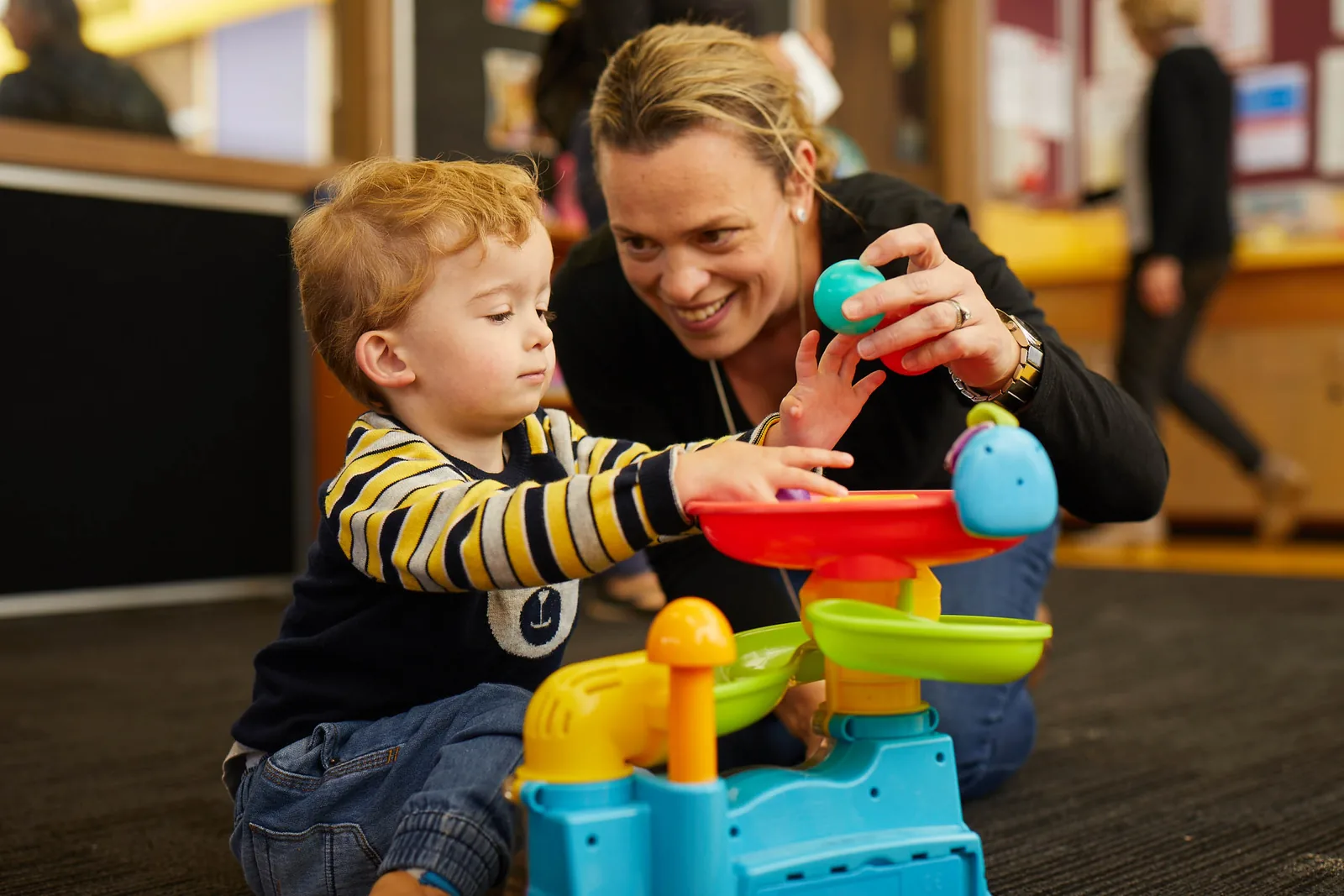
Inclusive play for children with disability: interests and connection
More than Child’s Play: Tips to help children of all abilities learn as they play
By Mariza O’Keefe · Originally published 6 March 2019
Let your child’s interest shape the next activity
Notice what your child enjoys and offer an activity they can join in comfortably. Ask or observe how they want to participate, including whether they prefer time alone, alongside others or together. A short enjoyable interaction can be valuable without turning every moment into practice.
Raising Children Network’s play guidance offers practical ideas. If communication or access makes participation difficult, discuss it with a suitable professional, such as a speech pathologist. A general toy suggestion is not an individual therapy program.
Original article and dated context
Communications Advisor at Villa Maria Catholic Homes, Mariza O’Keefe, has worked in communications within the non-profit sector for almost four years. A former journalist for Australian Associated Press for more than a decade, she has a passion for storytelling and diversity in the media.
Resilience, communication, making friends, social skills, confidence, problem solving – this all develops when children play. Shh! Don’t tell the kids they learn all this during child’s play.
We have turned to the experts to understand more about how play and toys help children with disability learn and here’s a few tips from them.
Find what interests your child
A great place to start is finding what interests your child.
Whether it is superheroes, books, dolls, Lego or cars – if your child loves it, you have a better chance of maintaining their interest when you use those toys or games when they play.
Think about what excites and interests them, makes them smile and laugh.
Play between children of all abilities helps everyone
Children with disability can learn a lot from their typically developing peers. Children are great teachers of other children. Communication, social skills and appropriate behaviour are all skills that can be learnt effectively from role models like friends and playmates.
Typically developing children also benefit significantly from getting to know children with disability. They learn about diversity. Helping peers who may be finding a task difficult because of a disability is a great way to boost a child’s self-esteem.
NDIS statistics show that one in three adults with disability do not have friends outside their family and carers. This can lead to isolation and loneliness
[Clickability update, October 2026: The source period and measure are not identified here. Do not treat this as a current statistic or an outcome that a particular play activity can prevent. Current play and friendship guidance focuses on individual participation.]
When children practise play skills with children of varying abilities, they gain confidence and the ability to make friends, hopefully throughout their lives.
Make time for structured and unstructured play
Unstructured play is free play and it is the best type of play for young children.
It is spontaneous and determined by the child’s interest at the time. It also allows children to use their imagination, be creative and move at their own pace.
Dressing up, pretend games, running around the backyard or at a playground are all examples of unstructured play.
Adults usually lead structured play at a fixed time and in a set space.
Think swimming classes, storytelling groups for toddlers, dance, music and drama classes and sport.
Skills developed during these times include listening, turn-taking, working with others and social skills.
Take advantage of everyday routines for learning
Word games while you are walking to school, sitting down together to watch television and talk about your favourite characters, doing chores together can all be great opportunities to play and learn.
While folding the laundry you can talk about the different colours and types of clothes you have in the laundry basket.
Playtime is not just for the kids
Parents cannot underestimate the value of their attention and time when it comes to learning through play. A parent who can spare a bit of time regularly to play with their child can provide invaluable support to their learning and development.
Remember to have fun, get down to their level and enjoy each other’s company. Even if it is only for a few minutes every day – quality and not quantity matters.
When you play with your child, you can role model important skills like taking turns, sharing, using manners and appropriate behaviour. Most of all you are building a connection, having fun together and making them feel important.
What about toys?
What are the best toys for my child to play with?
The experts say that “open-ended” toys are great for learning and development. They are toys that can be used in lots of different ways.
Blocks, balls, cardboard boxes, dress-us, crafts are all “open-ended toys”. They encourage children to use their imagination, problem solve and be creative.
How many toys are enough?
Research shows that too many toys can overwhelm children. What matters is the quality of the toys and not the quantity.
Where is the best place to find toys for when you are on a budget?
Many local councils have toy libraries. Most charge a membership fee, but then you can borrow toys free. This is a great way to refresh your toy collection regularly without breaking the budget.
Does your young child have a developmental delay or disability?
VMCH can help. We provide a range of educational and therapeutic programs, counselling, and service navigation for young children (birth to eight) with developmental delays or disability.
Clickability editorial update: October 2026
Adapt the environment and respect different ways to join in
Ask the child and family about interests, communication and sensory preferences. Offer choices about activities and help other children understand how to communicate respectfully. Do not measure success only by whether a child joins the same game in the same way as everyone else.
Use play and friendship information alongside your role and professional guidance. Explain any therapeutic goals separately from ordinary play. Keep the child’s enjoyment and choice visible rather than treating another child’s behaviour as the only acceptable model.
Questions readers ask
Does inclusive play guarantee future friendships?
No. It can offer opportunities for enjoyment and connection.
Must all children join the same activity in the same way?
No. Consider preferences, communication and access. Official guidance
Find support for your child’s communication and participation
Tell Clickability what your child needs help with and compare reviewed and rated speech therapy providers. Ask how they work with the child’s interests and family.