Life after school: a specialist teacher’s perspective
Insight: Specialist teaching, ‘the best gig’
By Hygenia Lobo · Originally published 28 October 2020
Original article and dated context
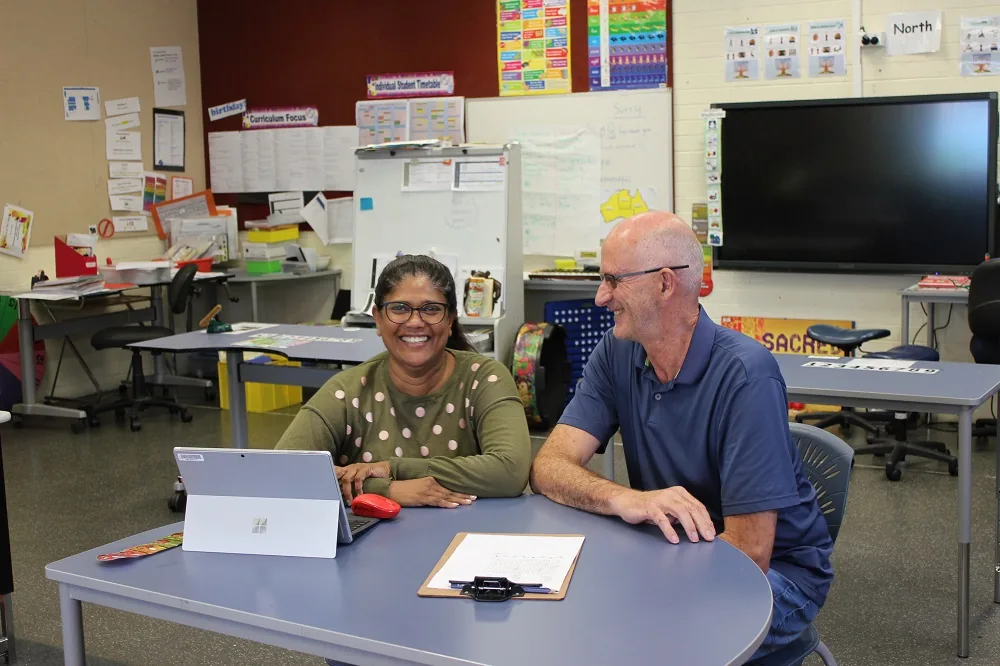
Hygenia Lobo, music-lover and Doggies supporter, loves travelling and trying new things. Her greatest love, aside from bonding with family and friends over food – “I love food, period” – is teaching at VMCH’s specialist school St Paul’s College, in Balwyn. Hygenia has guided children and young adults through their educational journey at St Paul’s, preparing them for life after graduation, for more than two decades. For more, visit Villa Maria Catholic Homes.
Specialist teaching
Specialist teaching is the best teaching gig and I would not swap it for anything. I’ve been teaching at St Paul’s College in Balwyn for 21 years and have learnt so much from my students over that time; they’ve taught me to see the world through their eyes and nothing gives me more joy to celebrate all their achievements be it big or small. The biggest plus is the rapport you build with your students and families along the way. At the same time being a special education teacher has its challenges. Teachers have to wear many hats and navigate the pressures of each day, especially when there is shortage of staff because special education is ‘hands on’.
Teaching teenagers
I believe when a child turns 14 or 15 their Individual Learning Plan should reflect goals that prepare them for life after school. At St Paul’s, the emphasis is on being realistic and taking into account the needs, preferences and strengths of our students in a meaningful way. In secondary school we connect academic skills with living skills and real life experiences. We also integrate school–based enterprises within the school community, for example our Black Cat Café, where students develop essential life skills to pave the way for their future employment and independence.
Working with families
It’s very important to have a partnership with parents right from the get go. Their input is valuable and when decisions are made collaboratively, everyone is invested and there is a mutual commitment which involves the parents and school staff.
NDIS impacts
Since the introduction of the NDIS much has changed. It’s great when we hear about a good outcome for our students and families but is very disheartening when we hear how some of our parents feel stranded when their NDIS funding is minimal and the evaluations do not reflect the funding required for their child’s overall quality of life, post school. I think more needs to be done around information and procedures around services and funding. For example, NDIS funding information nights, more information on disability expo’s and disability events in Melbourne.
Life beyond school for young people with disability
Depending on the need and preference of the student and choices made by parents, life after graduating can involve attending day programs, or individualised programs with paid supported employment thrown in the mix. However, finding the right program can become a stressful experience for our parents, as some of the options available are limited and the services may not cater to their child’s needs.
What makes my school so unique?
I work with an amazing group of people, especially our learning support staff who are dedicated and want the best for our students. As professionals we are headstrong for our students and constantly advocate for them. I have made some very close friends in my 21 years who have influenced and taught me so much along the way. I love being part of the St Paul’s team, it’s a pretty special place to be.
What do you enjoy about working for a Catholic school?
I am surrounded by plenty of goodwill, understanding and compassion. I am reminded and given the opportunity every day to practice and live my faith. I love the fact it allows me to keep my spiritual connection constant.
Graduation
It’s bittersweet, and a very emotional day. Seeing students through to graduation is a team effort and it involve teachers, learning support and allied health staff nurturing them over the years. It makes us all very proud of their achievements and to see how far they have come.
Clickability editorial update: October 2026
Start the transition conversation with the young person
Ask what they enjoy, what they want to explore and what assistance makes communication easier. Compare study, work and community options without assuming a day program is the only destination. Write down who is responsible for each next step and when you will revisit the plan.
Distinguish school adjustments under the education standards from proposed NDIS supports. Ask providers about actual places, skills, access and costs. A graduation plan should remain open to changing preferences.
Ask to try options before committing to a routine
You can request information in a useful format and assistance to visit or discuss an option. Ask what a day would involve, who would support you and how you could raise a concern. NDIA employment information can help frame work-support questions. You do not have to choose an option solely because adults consider it realistic.
Questions readers ask
Is the article’s suggested planning age a fixed requirement?
No. Plan around the young person and their circumstances.
Find help comparing post-school supports
Tell Clickability which options the young person wants to explore. Compare support coordinators and ask how they include the person’s preferences and clarify responsibilities.