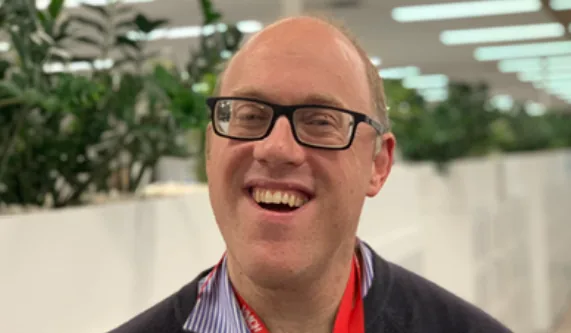
Living with cerebral palsy: Phin Meere on assumptions
Insight: Living with Cerebral Palsy
By Phin Meere · Originally published 7 October 2020
Original article
Phin Meere has been a Community Broadcaster for over 10 years’ with his monthly radio show "The Boldness" on 3CR. He also appeared regularly on C31's Disability TV Show "No Limits" and has strong passion for social justice and disability rights. In his downtime, Phin loves watching movies, listening to podcasts, and indulging on Indian takeaway! Phin works as a Communications Officer for VMCH’s Community and Disability Services. For more, visit Villa Maria Catholic Homes.
What does World Cerebral Palsy Day (WCPD) mean to me? I’ve given it a lot of thought, as I live with cerebral palsy every day, so every day is World Cerebral Palsy Day for me, I suppose.
Most of you reading this will not have cerebral palsy but will want an insight into what life is like. It’s difficult insight to give, as it is just part of my life. It is natural to want to pigeonhole people or make my experience comparable to somebody else’s because we both have cerebral palsy. It’s not really; my experiences are my own and will differ from other people’s, as cerebral palsy affects people in different ways.
I have often felt people are treated differently because they see I’m different, and somehow that makes me less than what or who they are. It’s like because I’m physically different to them, I must be different in other ways, so people assume they can talk down to me. As a younger person, I would just put up with this because I believed I was different from them. I would compensate for this by learning how to be social and put people at ease by using humour. I wish I didn’t have to do this, as people can just feel comfortable with our differences, to accept us for who we are.
My achievements this year have been trying to live through COVID-19 while maintaining my independence, and using my NDIS supports to achieve this outcome. I’m trying to find ways of being able to cut my fingernails without asking family to do it for me. I may have to go to a podiatrist or get a pedicure or a manicure regularly. It is probably the smaller things that most of you would take for granted, that we physically struggle with.
If you see we are struggling with something, it is natural to assume we want help to overcome it or fix the problem. It’s an assumption that you are making rather than a reflection of what we need or want. Never assume, always ask if we need or want help with something. Respond by helping us with our needs not what are our assumed needs.
The greatest thing you can do this WCPD is to listen to us! Happy WCPD, everyone!
Clickability editorial update: October 2026
Explain the assistance you want for the task
You can say which part of an activity needs help and which part you want to do yourself. Ask a worker to check before taking over. If the usual approach does not work, describe what would be different and discuss another option.
Use Commission rights standards as context for communication and choice. For equipment or therapy questions, clarify the functional need and funding arrangement rather than assuming a service mentioned in someone else’s account is covered.
Ask before helping and listen to the answer
Offer assistance without grabbing equipment, completing a task unexpectedly or speaking over the person. Ask what help they want and follow their preferred method within your role. Someone may want time or a different approach rather than immediate intervention.
Avoid assumptions about understanding, personality or needs based on cerebral palsy. Explain any safety concern respectfully and discuss it instead of using the diagnosis as a reason to override choice. Phin’s account is a reminder to learn from the individual, not a script for every person.
Questions readers ask
Does cerebral palsy affect everyone in the same way?
No. The article itself describes an individual experience.
Does mentioning a service establish NDIS funding?
No. The support and funding rules need an individual check. Official guidance
Find support that asks and listens
Tell Clickability how you want assistance delivered. Compare reviewed and rated providers and discuss communication and choice before starting.