NDIS and AI: keep participant rights in provider technology decisions
AI is arriving in the NDIS. The sector must help shape it.
By Clickability · Originally published 12 June 2026
Original article and dated context
The NDIS is entering a new technology moment. Providers are being asked to deliver more responsive support, stronger safeguards, tighter compliance and better workforce management, often with fewer resources and thinner margins. At the same time, AI is moving from abstract possibility to practical reality, including AI‑native care management and operations platforms designed specifically for NDIS providers. The question is no longer whether AI will affect the disability sector. The question is whether the sector will shape it carefully, ethically and on its own terms.
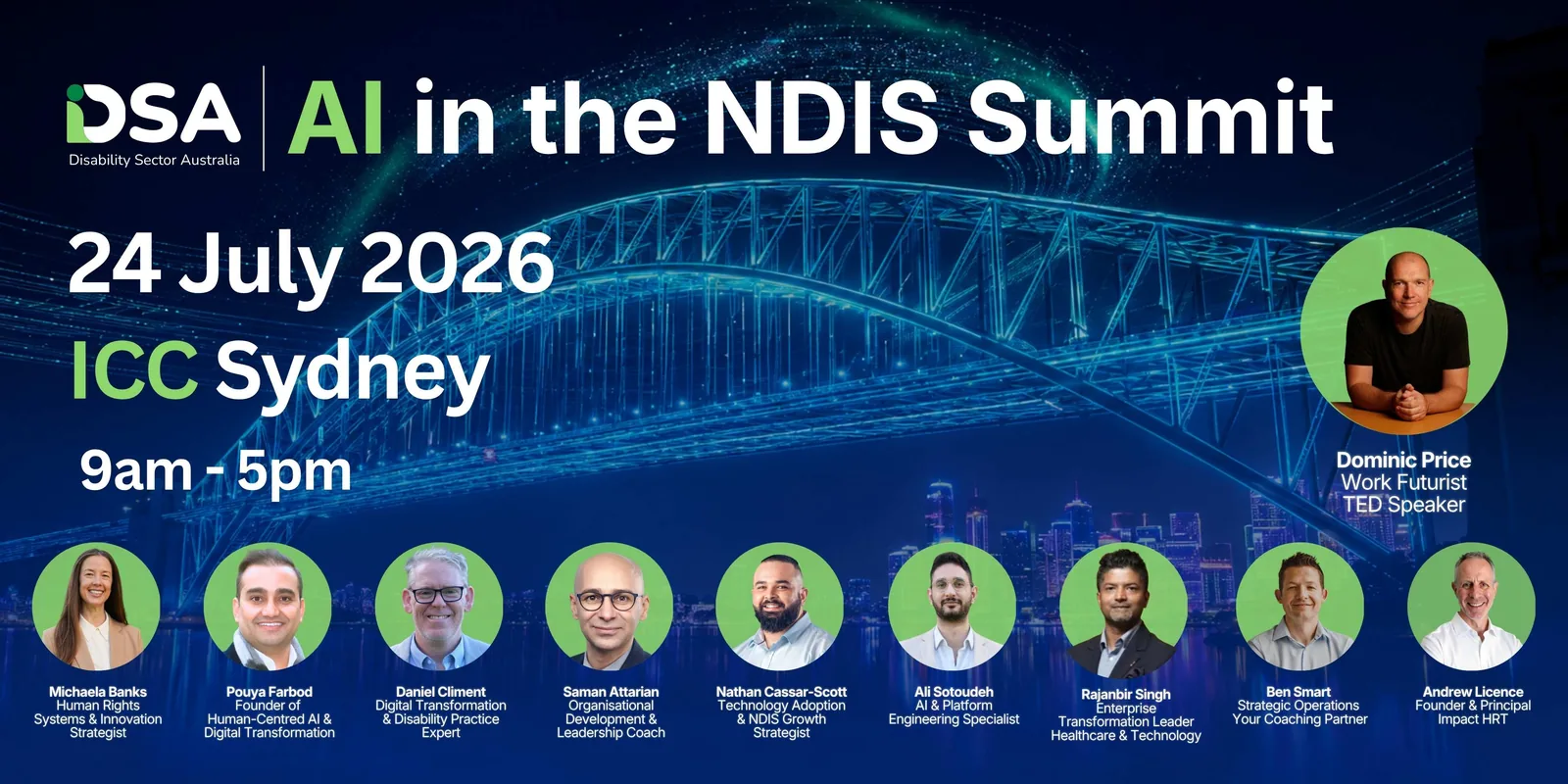
That is the purpose behind the AI in the NDIS Summit. Convened by Disability Sector Australia (DSA), the Summit is designed to help providers move from curiosity and concern to practical judgement. The next stage of the conversation needs to be more practical: less focused on generic AI literacy or open‑ended experimentation with tools like ChatGPT, and more focused on where AI‑enabled systems can genuinely help, where they must be governed, and what disability providers need from the next generation of technology.
This matters because the disability sector cannot afford passive AI adoption. If AI enters disability services in shallow, poorly governed or generic ways, it risks adding new problems rather than solving existing ones. Tools that are not designed around disability service delivery can miss the realities of participant safeguarding, workforce complexity, funding pressures, compliance obligations and the operational demands providers already carry.
But there is also a significant opportunity. When designed around provider realities, AI can reduce administrative friction, strengthen decision‑making, improve visibility over operations and give leaders earlier warning of emerging risks. AI‑native care management and workflow platforms can support better rostering, stronger compliance workflows, improved documentation and more sustainable service delivery. Used well, they can help protect the time and energy that workers and leaders need for the human parts of the job that matter most.
This is the line the sector now has to walk. If AI is framed only as disruption, providers will understandably meet it with caution. If it is framed only as a productivity trend, it will miss what is different about disability support. In this sector, technology cannot be judged only by speed or efficiency. It must also be judged by whether it upholds rights, protects dignity, strengthens safeguards and supports better relationships around the person. That is the heart of “human at heart, AI with purpose”.
That is why the Summit matters now. DSA is convening it not as a technology showcase, but as a serious sector conversation about practical readiness, governance and fit‑for‑purpose systems. The focus is on practical demonstrations of how AI could support real provider workflows across rostering, workforce, finance, operations and compliance, with an emphasis on purpose‑built, NDIS‑aware platforms rather than generic tools. The aim is not to encourage blind adoption. It is to help providers understand what responsible use could look like in practice, and what questions they should be asking before any system is introduced.
For many providers, workforce pressure is one of the clearest examples of where this conversation has become urgent. Services are trying to balance participant needs, staff capability, travel time, fatigue, industrial obligations and funding constraints, all while maintaining continuity and quality. Purpose‑built tools may be able to support those decisions by making patterns, gaps and risks more visible earlier. In that sense, AI is not replacing judgement. It is helping leaders apply judgement in a more informed and sustainable way.
The same is true in compliance and safeguarding. Recent guidance from the NDIS Commission makes clear that AI cannot replace human oversight, and that privacy, de‑identification, accountability and legal obligations remain central. That is an important reminder. The issue is not whether AI can be useful. The issue is whether it is introduced with the right safeguards, the right governance, and the right understanding of what should always remain in human hands.
[Clickability update, October 2026: The cited regulatory concern needs scope: the Commission’s February 2026 statement addresses AI in developing and reviewing behaviour support plans. It does not endorse AI tools. Read that specific position statement.]
Margins and sustainability are also part of this story. Many providers are trying to hold together quality, workforce stability and participant responsiveness in an environment where every inefficiency matters. When designed around provider realities, AI‑enabled systems can improve visibility over cost, reduce avoidable admin burden and support stronger operational decisions. In that sense, this is not a side conversation about innovation. It is part of a larger conversation about how the sector stays viable while preserving the quality and humanity of support.
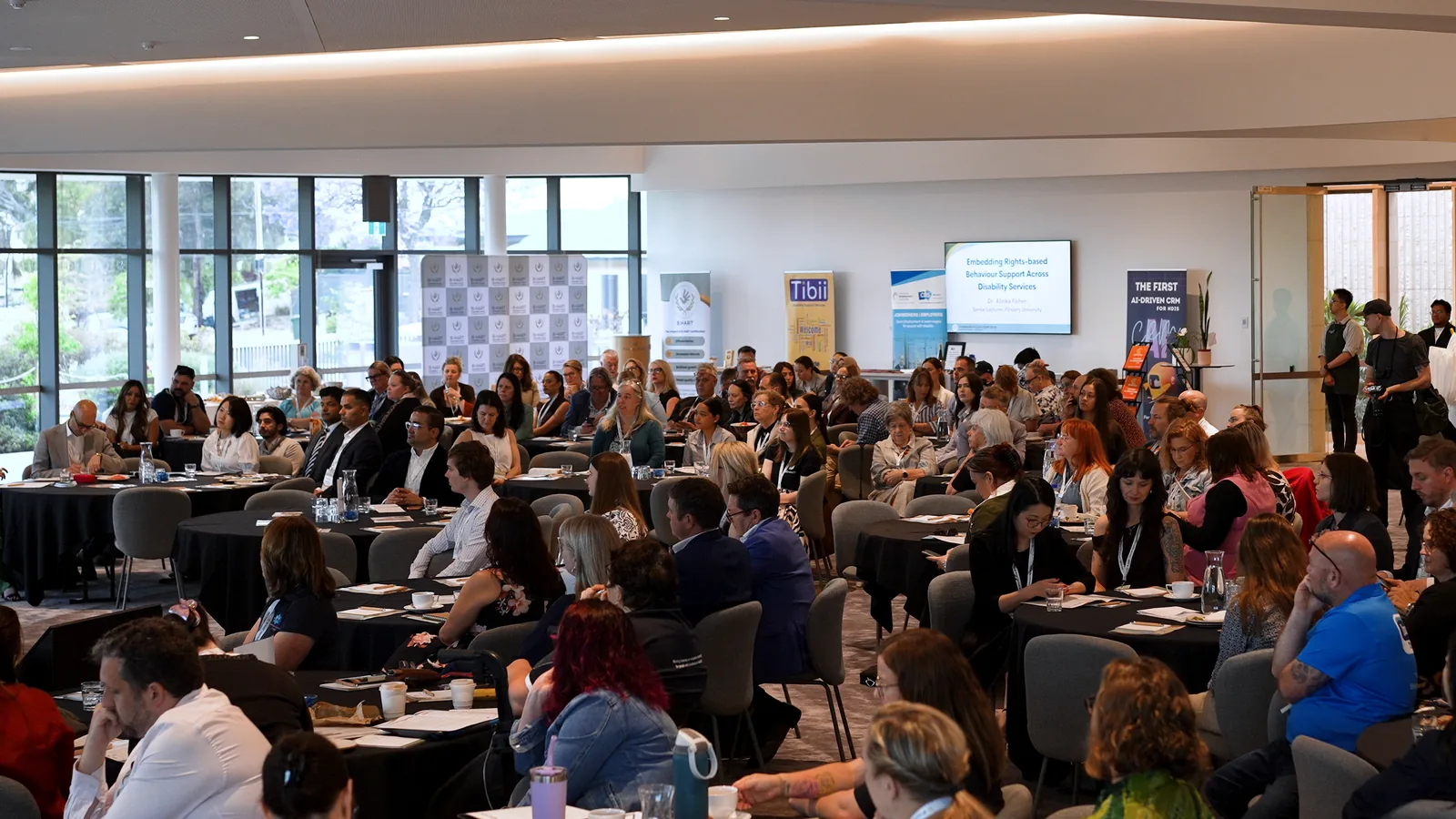
That is why the AI in the NDIS Summit has been designed as a practical day rather than a theoretical one. Across keynotes, expert sessions and practical demonstrations, the focus is on helping providers explore what responsible AI adoption could look like in their own context. Attendees will leave with a 90‑day roadmap intended to help translate discussion into next steps for their own organisations.
Ultimately, the disability sector should not be asking only, “Can we use AI?” It should be asking, “What kind of AI should we allow into disability support, under what conditions, and in service of whose outcomes?”
The AI in the NDIS Summit exists because this is a conversation the sector needs to have together. For providers wanting to engage with that conversation in a practical, grounded and values‑led way, the Summit offers a timely opportunity to do exactly that.
As a valued contact, you can also use the discount code Click99 to receive 37% off all in-person summit tickets. With Early Bird pricing, this brings your ticket down to just $99.
[Clickability update, October 2026: This discount and early-bird price belong to a past event invitation and are not presented as current offers.]
Clickability editorial update: October 2026
What participants can ask when a provider uses AI
Ask whether AI is used in notes, messages or decisions about your support, which information it receives and who checks the results. Request an explanation in the format that works for you. Tell the provider if a record misrepresents what happened or what you want.
Record who approves each use and who checks outputs. Test errors and access needs as well as speed. Assess privacy across the whole tool and workflow rather than treating a training switch as the complete safeguard.
Questions readers ask
Is the Commission’s statement an approval of AI products?
No. It addresses obligations when AI is used for behaviour support plans. Official guidance
Can a provider use a summit promotion as evidence of better outcomes?
No. Outcomes and suitability need evidence from the actual service and use.
Compare services that will discuss your preferences
Use Clickability to describe the support you need, then ask prospective providers how they communicate and protect your information. Read reviews alongside your own questions.