NDIS provider quality and safety: the regulator’s strategy
A Stronger Regulator. A Better Deal for Participants.
By Clickability · Originally published 19 November 2025

Original article and dated context
What the NDIS Quality and Safeguards Commission’s 2025 to 2027 Strategy Means for People With Disability
A More Assertive Regulator Focused on NDIS Participant Safety
[Clickability update, September 2026: These are intended improvements, not a guaranteed complaint deadline or demonstrated outcome for every participant. Check the current reporting process and published service standards. See how to report a provider concern.]
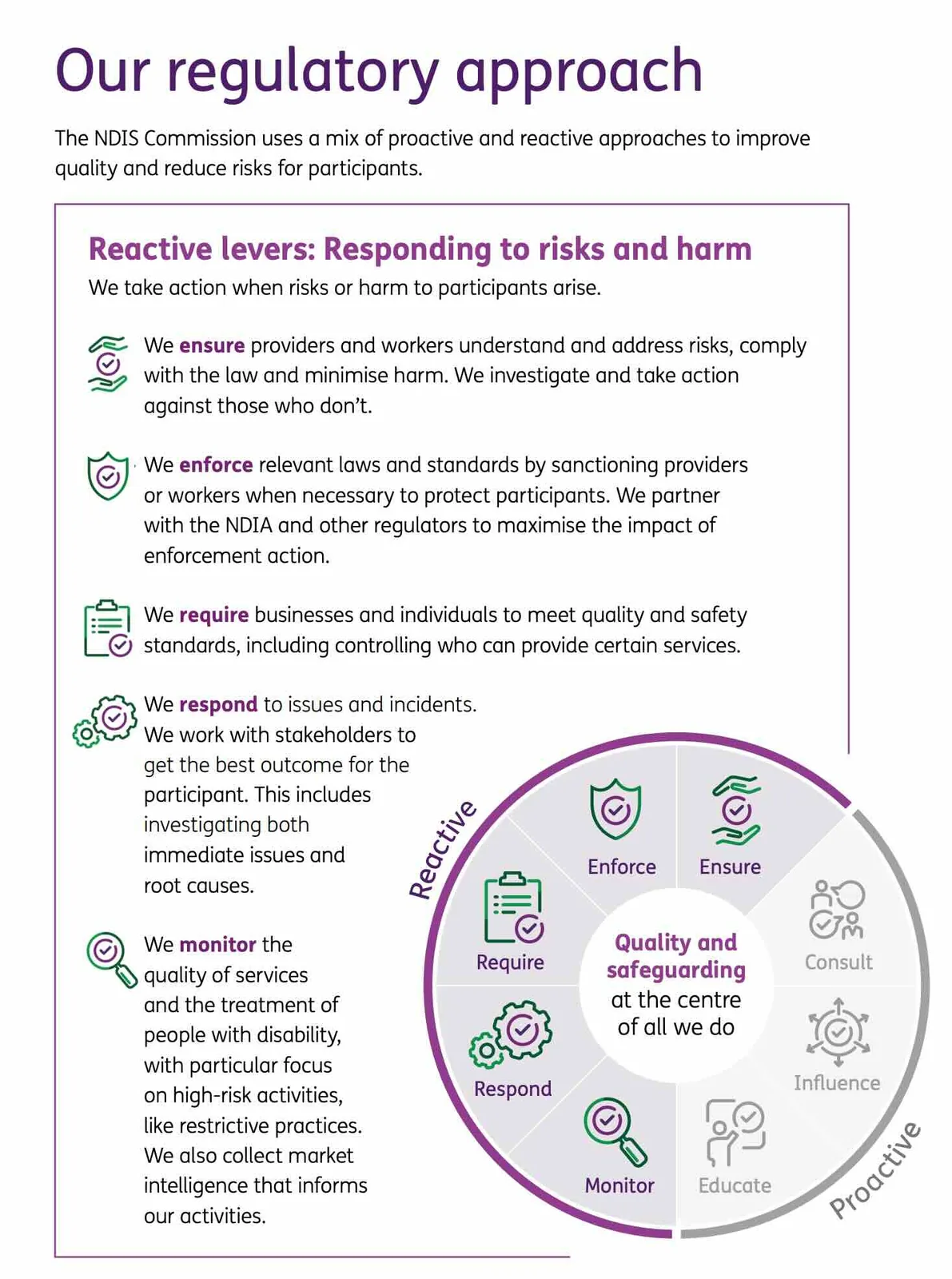
Regulatory diagram explained
The reactive diagram describes responding to incidents and harm, requiring standards, enforcing the law, addressing risks and monitoring patterns. These actions sit alongside proactive work; they are not a guarantee that every report results in a particular enforcement outcome.
Quality as a Human Right for those seeking NDIS Supports
For participants, this means supports should feel consistent, safe and person-centred. Providers must show that their services help people make progress toward their goals, not just deliver hours on a roster.
- supports that better align with their needs, culture and goals
- clearer evidence that providers are improving over time
- greater protection from unsafe, inconsistent or low-quality services
Making Sure NDIS Budgets Reach the Right People
- less risk of being steered toward overpriced or unnecessary services
- stronger action against providers misusing funds
- reassurance that individual budgets are protected and used meaningfully
- a more sustainable NDIS that can continue supporting people long-term
Listening to Lived Experience from NDIS Participants
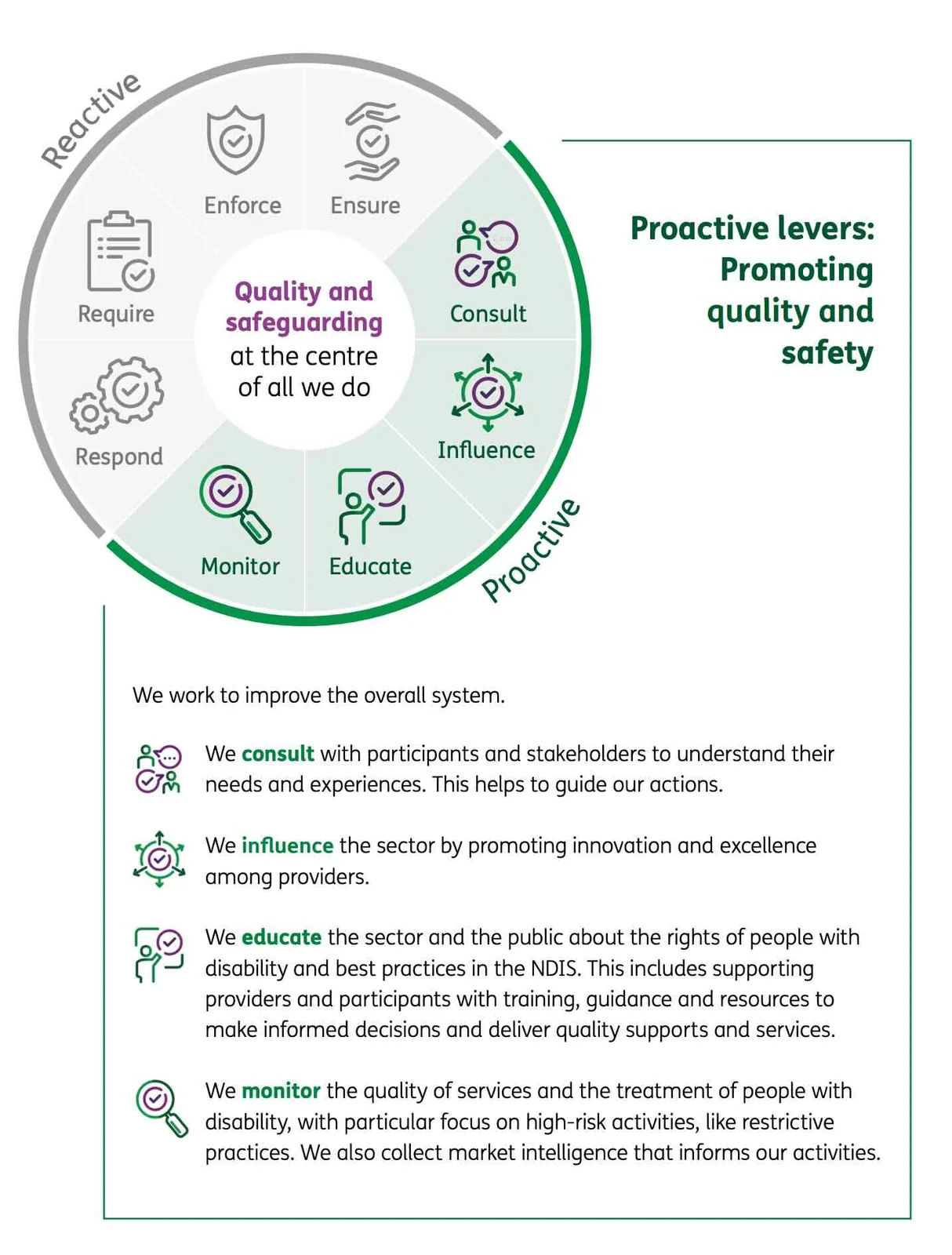
Regulatory diagram explained
The proactive diagram describes consulting people with disability and stakeholders, influencing practice, educating participants and providers, and monitoring quality and risk. Both approaches place quality and safeguarding at the centre. The diagram explains the strategy, not a claim that a particular service is safe.
[Clickability update, September 2026: Read the expectations below as strategy aims. Actual safety and service quality require continuing attention, and a regulatory roadmap does not remove the need to report concerns. See the Commission’s published strategy.]
What Participants Can Expect Going Forward
- improved access to safe, respectful and culturally relevant supports
- clearer action when concerns are raised
- more transparency around provider behaviour
- better assurance that plan budgets deliver real value
- strengthened protections for vulnerable groups
- more consistency across metro, regional and remote communities
Clickability editorial update: September 2026
How participants can use the strategy when a support falls short
Describe the specific concern, when it happened and what you need to change. If you feel comfortable, raise it with the provider and ask for a response. You can report provider or worker quality and safety concerns to the Commission; questions about an individual plan or funding belong with the NDIA. Check the reporting routes.
Keep relevant messages and details in a format you can use. Ask for help from a supporter or independent advocate if you want it. A complaint target is not a promise that every case will finish within that period.
How providers can show quality in the support people receive
Use participant feedback to identify a practical issue and record what you change, who is responsible and when you will review it. Check the person experiences the improvement, rather than treating a completed form as the outcome.
Make the complaints route accessible and explain it without discouraging the person from reporting. Address actual risks and meet the applicable practice and conduct requirements. The strategy describes a direction for regulation, not an exemption from current duties.
Questions readers ask
Does the strategy guarantee a fast result for every complaint?
No. Strategic aims and service standards are not a guarantee for every case. Check the Commission’s current process. Official guidance
Can the Commission change my individual NDIS plan budget?
Plan and funding matters are directed to the NDIA; the Commission handles provider and worker quality and safety issues. Official guidance
Compare providers and ask how they handle feedback
Describe the support you need through Clickability. Compare profiles and reviews, then ask providers about communication, quality and their complaints process.