New to the NDIS: a practical first 90 days with your plan
New to the NDIS? Here’s What to Know in Your First 90 Days
By Clickability · Originally published 27 May 2026
Original article and dated context
Original checklist or chart explained
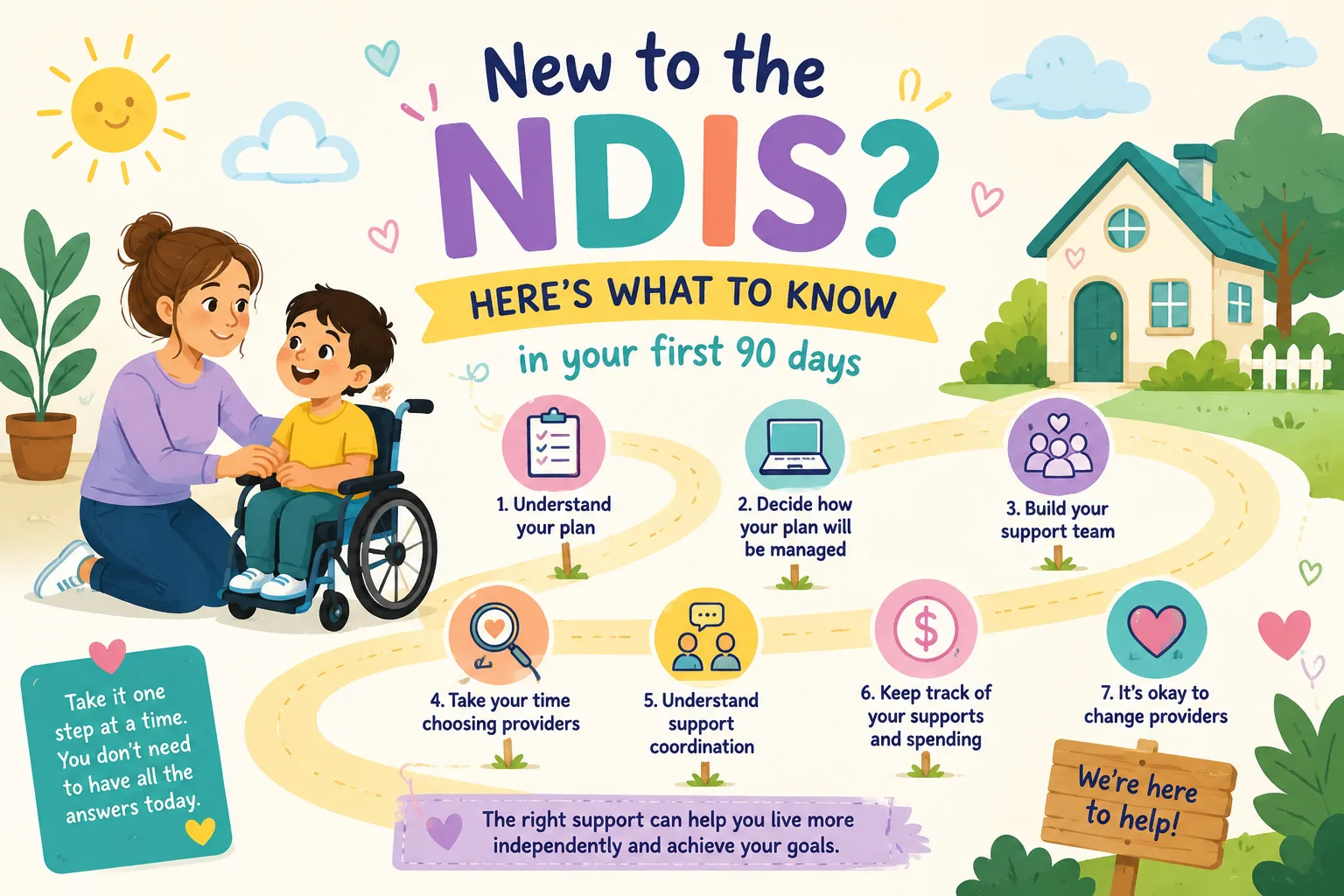
The illustrated checklist suggests understanding the plan, deciding how funding will be managed, building a support team, comparing providers, understanding coordination, tracking support and spending, and changing providers if needed. The main article gives these steps in readable detail. The 90-day framing is a suggested pace, not a statutory deadline or requirement to spend all funds.
Step 1: Take Time to Understand Your NDIS Plan
- your goals,
- the supports you have been funded for,
- and how your funding can be used.
- Daily living support
- Community participation
- Therapy services
- Support coordination
- Transport
- Assistive technology
- Capacity building supports
[Clickability update, September 2026: Check the support and funding shown in your actual plan, including restrictions and any funding periods. The full plan total may not be available immediately. See how NDIS funding is made available.]
Step 2: Decide How Your Plan Will Be Managed
- NDIA-managed
- Plan-managed
- Self-managed
[Clickability update, September 2026: NDIA-managed supports require registered providers. Self-managed and plan-managed supports can generally use unregistered providers, but service-specific registration requirements and transitions still apply. Check current mandatory registration rules.]
Step 3: Start Building Your Support Team
- Support workers
- Support coordinators
- Occupational therapists
- Speech therapists
- Psychologists
- Physiotherapists
- Cleaners or gardening services
- Community participation providers
Step 4: Take Your Time Choosing Providers
- What areas do you service?
- Do you have experience supporting people with similar needs?
- What does communication look like?
- How flexible are your services?
- Can I read participant reviews?
Step 5: Understand What Support Coordination Does
- understand your plan,
- connect with providers,
- organise services,
- and build confidence using your funding.
Step 6: Keep Track of Your Supports and Spending
- provider appointments,
- invoices,
- service agreements,
- and how your funding is being used.
Step 7: Remember That It Is Okay to Change Providers
[Clickability update, September 2026: Before changing, check notice and cancellation terms and arrange any continuity or provider-record updates needed for your support. Follow the current provider-change steps.]
Common Feelings in the First 90 Days
- information overload,
- decision fatigue,
- uncertainty,
- or anxiety about “getting it right”.
How Clickability Helps Participants Compare Providers
- Search providers by location and service type
- Read participant reviews
- Explore provider profiles
- Compare support options
- Find services suited to their goals and needs
Final Thoughts
Clickability editorial update: September 2026
Your first fortnight: choose one support to organise well
Write down the most useful next service and the information you need before starting it: who will deliver it, when it can begin, the agreed price and how it will be paid. Use the actual plan to check that the support and available funds fit.
Keep provider replies together. If there is a wait, ask about the next update rather than signing several overlapping agreements. The aim is a workable first arrangement, not completing every possible task by day 90.
How families can reduce the paperwork without taking over
Ask which parts the participant wants help with. Create one place for the plan, appointments and agreements, then agree a short time to review the next task together.
Record questions in the participant’s own words and ask providers to answer directly in an accessible format. Support should make choices easier to understand, while leaving the person involved in choosing their team.
Questions readers ask
Do I have to use all my funding within the first 90 days?
No. The article’s 90-day framework is not a spending deadline. Follow your actual plan dates and funding availability. Official guidance
Should I sign with every provider who has an opening?
Compare the support, costs and agreement first. Availability alone does not establish suitability. Official guidance
Find the first provider your plan needs
Tell Clickability which service you want to arrange and where you need it. Compare reviewed and rated profiles and ask the questions that matter before starting.
Find a provider for my first support · Browse the provider directory