Travelling independently with NDIS support: Stacey’s story
How the NDIS supported me to travel
By Stacey · Originally published 1 May 2018
Original article
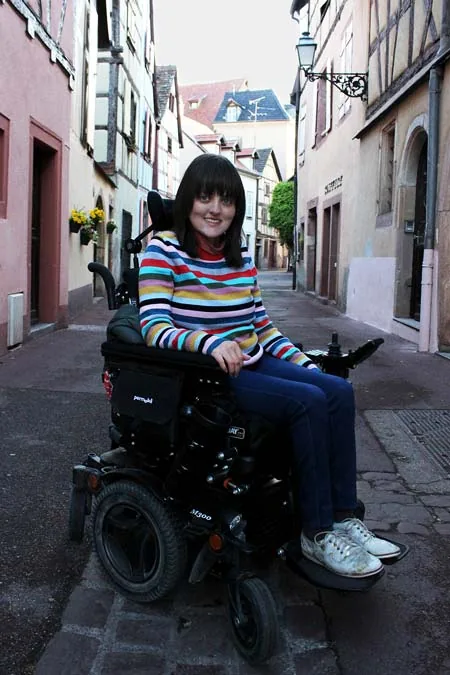
Stacey is 24 years old and lives in Melbourne. She has bethlem myopathy, a condition that weakens her muscles, and uses a wheelchair part time. She loves travel and photography, and works for the Tipping Foundation and the Youth Disability Advocacy Service (YDAS). She also blogs here. This article was first published with Tipping here.
The National Disability Insurance Scheme (NDIS) is a new way of funding disability supports here in Australia. It aims to give people with disability the right supports to meet their needs.
I was one of the first people to join the NDIS when it began rolling out throughout Australia in 2016. Like many people, I wasn’t sure what to expect or how the NDIS could support me.
The NDIS provides funding to meet a person’s goals, so the support I receive through the NDIS is unique to me and my needs.
During the planning meeting with my Local Area Coordinator (LAC), I told her how important maintaining my independence and being able to travel was to me. We decided they would become my main NDIS goals.
So the two main goals in my NDIS plan are:
Maintain my independence
Continue to travel independently
The goal that focuses on maintaining my independence allows me to get funding through the NDIS for supports such as physio therapy and someone to support me with housework that I have difficulty doing because of my disability. These supports allow me to continue living in my own home and maintain my independence.
I also got my new electric wheelchair funded through the NDIS. My old electric wheelchair was eight years old and was very run down. I was only able to travel to and from work each day before the battery ran out so I was never able to make plans with my friends after work or go to the shops as I’d constantly be worried about whether I’d be able to make it home or not.
Getting my new electric wheelchair has been life changing. It’s given me so much more independence and freedom to go places I simply couldn’t go before. It’s much more reliable and I don’t have to worry about the wheelchair’s battery life and whether or not I’ll get home okay.
I’ve always loved travelling so I knew I wanted to include travelling independently as one of my NDIS goals. Last year I embarked on a solo trip around Europe, which I wouldn’t have been able to do without support from the NDIS.
Of course the NDIS didn’t pay for me to travel to Europe. I saved up and paid for all of the expenses myself. I also organised the trip myself, spending literally hundreds of hours researching and planning the trip.
It certainly wasn’t all easy. Information about accessibility was often difficult to find. I had to ring Belgium to organise wheelchair assistance at a train station and use Google Translate to understand French accessibility information. But the effort was definitely worth it!
I received my new electric wheelchair a couple of weeks before leaving for Europe, just in time for my trip. The NDIS funded a custom made luggage holder that fits onto the back of the wheelchair. Without it I wouldn’t have been able to transport my suitcase independently and the trip would have been impossible for me to do solo. The NDIS made my trip possible with a simple (but invaluable) modification to my wheelchair.
So many people stopped me throughout my travels to comment on how great the suitcase holder was. I guess it’s not every day you see a wheelchair user zooming through Venice solo with a suitcase attached on the back.
But then again, isn’t that what the NDIS is supposed to be all about? Providing people with disability with supports that meet their needs and allow them to live the life they choose.
Clickability editorial update: October 2026
Plan the support around the trip you are paying for
List the practical tasks: moving luggage, charging equipment, transferring, accessing accommodation and getting assistance during transport. Confirm the arrangements directly rather than relying on a destination’s general accessibility label. Keep written details of equipment dimensions and assistance bookings.
Separate your travel budget from any eligible disability support. Check current support rules and NDIA guidance on overseas travel before assuming a historical modification or long trip establishes current funding. Stacey’s account shows how useful a practical adaptation can be; it is not a universal funding precedent.
Questions readers ask
Did the NDIS pay for the author’s Europe holiday?
The author explicitly says she paid her travel expenses.
Does the luggage-holder example guarantee funding for mine?
No. It is one historical decision; check current rules and your own support needs. Official guidance
Should I check overseas support arrangements before travelling?
Yes. Use the current NDIA residence and overseas-travel guidance. Official guidance
Find disability support for the practical help you need
Tell Clickability which services you are looking for. Compare reviewed and rated profiles and ask about the experience and arrangements relevant to your plans.