Ability Fest 2018: a participant’s accessibility review

Our Review of Ability Fest

By Tristram Peters · Originally published 27 April 2018
Audience members watching a band perform on a stage

Original article

Tristram Peters is a writer, editor, and disability advocate with a keen passion for sport. He recently represented Australia at the powerchair football world cup and sits on the sport’s executive board for the Asia Pacific Oceania zone. He also lives for music, because one interest isn’t enough.
A month ago, one of my best mates called me after getting to work. She’d been listening to triple j, as she often does, when Dylan Alcott (y’know, wheelchair tennis phenom, radio host, all round legend) graced the airways with some exciting news: he was putting on a festival.
My friend was excited not only for the top-notch set list, but because Dylan had announced that the festival would be all-inclusive. Being a wheelchair user himself, Dylan wanted to put on a festival where everyone could enjoy it, regardless of their disability. It was called Ability Fest.
The festival was in Melbourne, two states away from me, but I had to do it, right? The only plot twist was that the festival was in two weeks’ time. My mate couldn’t go because of work, so I enlisted my go-to travel companion/cousin/bringer of pep and we booked the trip. (Yep, this guy…)
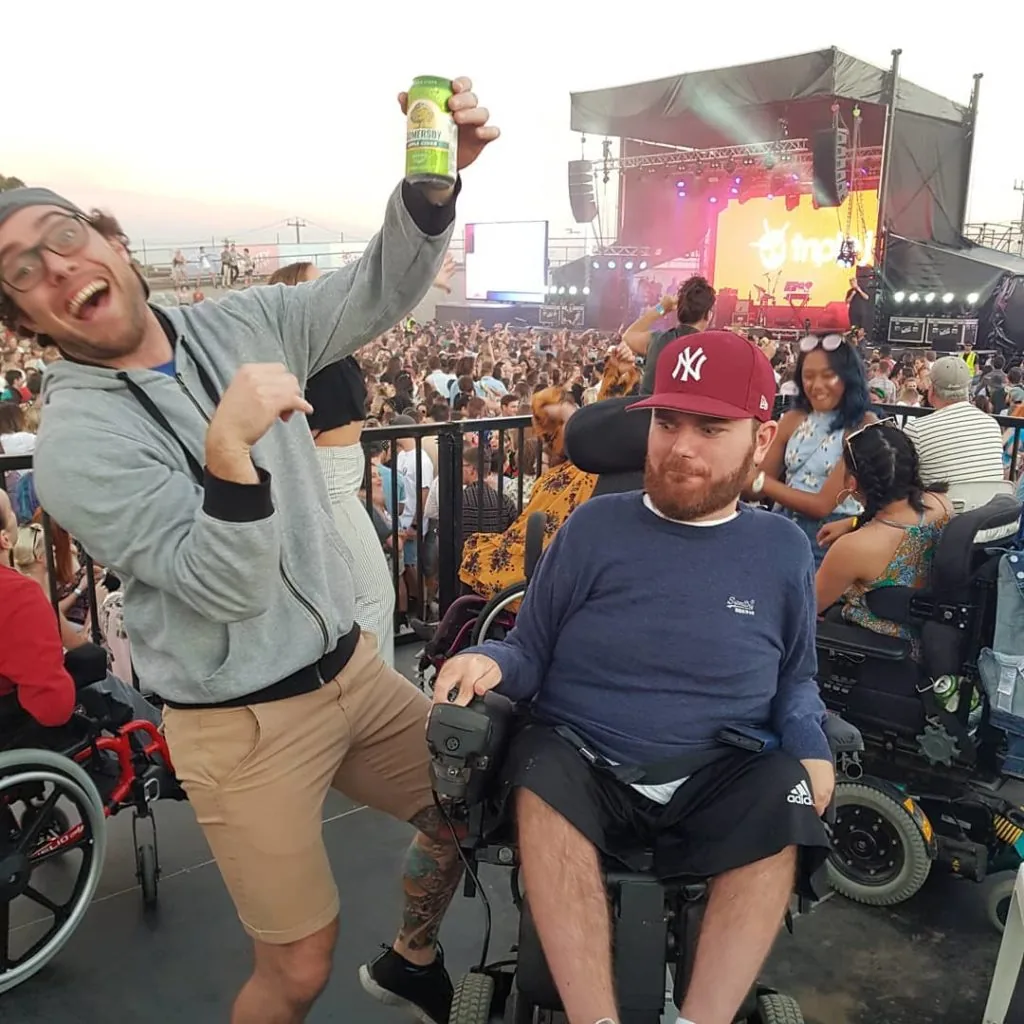
Tristram and his carer on a viewing platform at Ability Fest. Carer is pulling a crazy face.
Spoiler: without a doubt, it was one of the most accessible and uplifting festivals I’ve ever been to. ‘Why’s that?’ you ask. Here’s the review…

The Problems of Festivals Past

Being a music lover, I’ve been to my fair share of gigs and festivals. Most times, they’ve been amazing, highlighted by unforgettable people and life-affirming tunes. Every now and then, though, things go a bit pear shaped and it’s always because of my disability. Here’s a rundown of the most common issues:
  1. Booking the tickets. As we’ve written before, booking tickets can be a nightmare. Because of my disability, I need a companion to come to the gig with me and help me out. Unfortunately, you often can’t buy companion tix online, so I have to ring the sellers to do it over the phone. The problem is I get bottlenecked behind thousands, the seller sells out, and I’m left with nothing, unlike everyone else who just bought their tix online. For many gigs, there’s zero capacity for me to get companion tickets efficiently.
  2. General access. Many festivals don’t have viewing platforms, so I’m stuck at the back of the pack in my powerchair, without a view. A lot of the time I brave the mosh, but every now and then a viewing platform would go a long way. Same goes with flat, smooth, accessible paths: if it rains, I’m stuck, with no paths I can easily traverse. (Thanks though to the Spanish backpacker who once carried me to safety at a festival.) 
  3. People. I genuinely love people, but when I’m at gigs, I’m accosted by randoms who always tell me how great it is that I’m “out actually doing something”, “living a life”, and  “an inspiration”. For me and my disability, this is the biggest slap in the face. What else do people expect me to do with my life? Sit at home and do nothing? I appreciate their attempts at being nice, but their comments just accentuate how different they think I am. And it hurts.
That’s my whinge out of the way, because Ability Fest solved all this.

An All-Inclusive Party

Let’s barrel through the festival’s solutions: they let people with disabilities buy their tickets online, then present companion tickets at the gate for their carer; they had viewing platforms and accessible paths; and they made the festival so inclusive, disability so much the norm, that people with disabilities were no longer congratulated for doing normal things like attending a gig.
It’s this last point that was the big turning point. By making the festival so inclusive, more people with disabilities attended. Because of this, it wasn’t such a surprise for people to see us out enjoying the music; we were normal music fans just like them.
And it wasn’t just ticketing or paths that increased inclusion. Accessibility features included
  • AUSLAN interpreters
  • disabled bathrooms
  • highly visible signage
  • guide dog relief and water bowls
  • disabled parking and drop-off zone
  • quiet area/chill zone
  • volunteers galore!
How cool is that? I mean, just take a look at this...
One of the best things? All the artists donated their time to the festival. Because of their generosity, all proceeds raised go towards young people with disabilities. (Dylan even gave an 8-year-old his first tennis wheelchair on stage during the last set. Tears were shed, man.)

What’s the Big Deal?

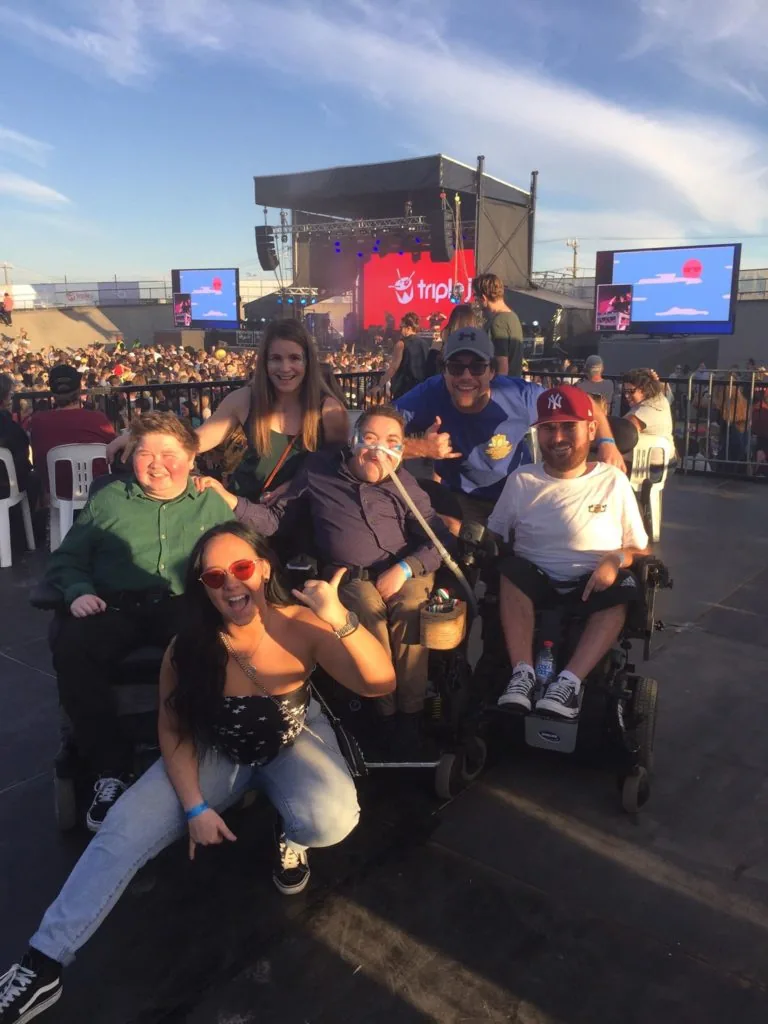
People with disability and their mates at Ability Fest
In society, the greatest fuel to prejudice is ignorance. Every time I’ve suffered from prejudice, or been hurled some stupid comment, it’s because the person responsible didn’t know any better. But Ability Fest introduced me, and others like me, to people who might not have dealt with disability before.
And importantly, people attended the festival not JUST because it was accessible, but because it was a festival with a stellar line-up. We were all average music fans, regardless of ability or disability or anything. That was Dylan’s mission and he succeeded.

Clickability editorial update: October 2026

Check the access details for the event you are attending

Ask how companion entry works, where accessible viewing and toilets are located, and how you will get between areas. Check the route from transport or parking as well as the festival itself. Ask what happens if weather changes the ground conditions.

Make a plan for the assistance you want and how to contact the organiser with questions. Do not assume features from this 2018 review still apply. If paid support is involved, check eligible NDIS assistance separately from ordinary tickets and other event costs.

Make access information usable before tickets go on sale

Give specific information about entry, companion arrangements, paths, toilets, viewing and quiet areas. Explain what is confirmed and who can answer individual questions. An inclusive label is less useful than details a person can use to plan.

Listen to feedback from disabled attendees and include them in planning. Do not rely on volunteers improvising around a predictable access barrier. Review how booking, arrival and the event itself work together.

Questions readers ask

Does the review confirm access at the next Ability Fest?

No. Confirm the current event’s arrangements with its organiser.

Are festival tickets automatically NDIS-funded?

No. Ordinary event costs and eligible disability-related assistance are separate. Official guidance

Find support to enjoy the events you choose

Tell Clickability what assistance you want at an activity or event. Compare reviewed and rated support work providers and discuss access and practical plans.

Find event participation support · Browse support work providers

Related articles