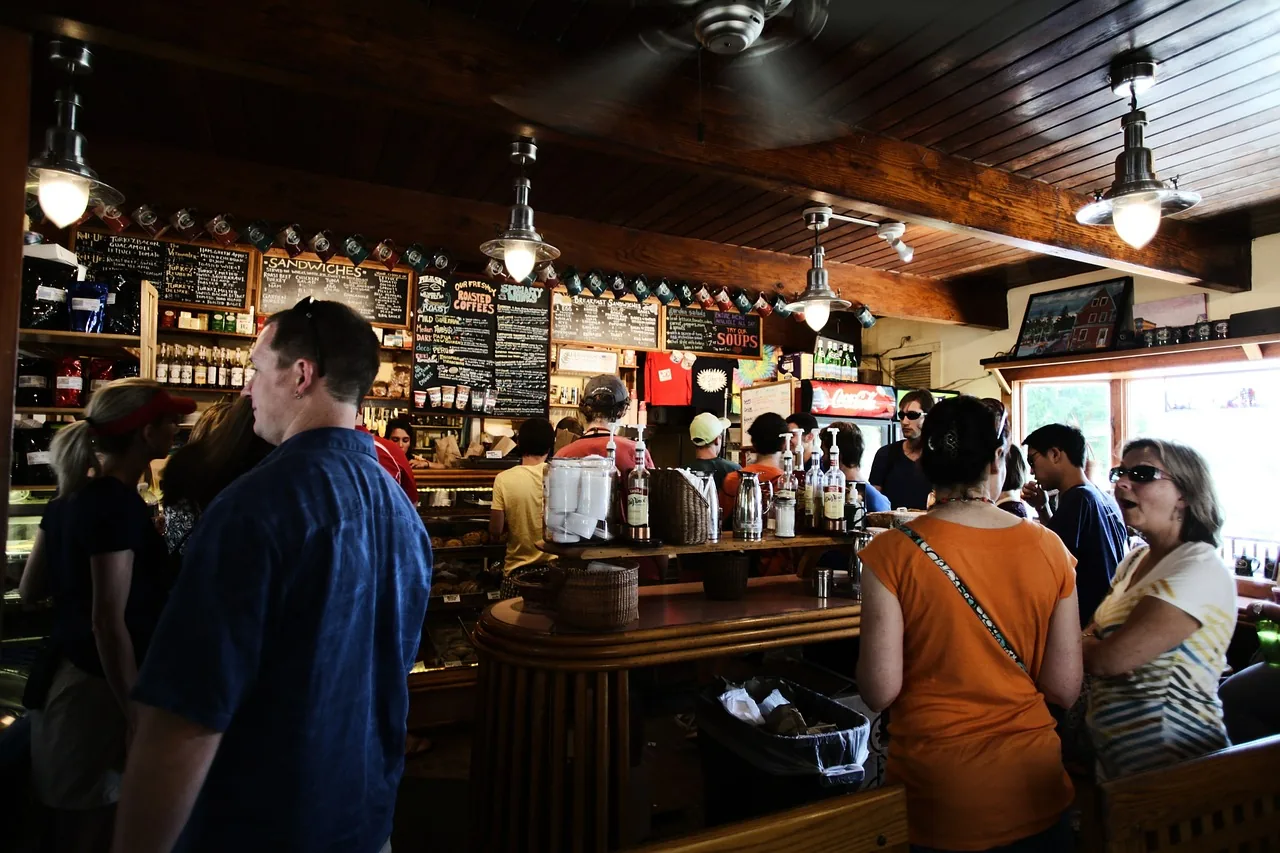
Cafe access with a walking aid: Tully’s everyday experience
Coffee on the Run
By Tully Zygier · Originally published 11 November 2015
Original article
Tully Zygier has spent the last five years working in the disability sector focusing on advocacy and project management. She holds a double degree from the University Of Melbourne and is a member of the City of Melbourne Disability Advisory Committee. Tully has personal experience with disability, having developed a rare chronic illness Familial Dysautonomia. Tully is a passionate advocate for accessibility and human rights.
I like to eat. More importantly, I need to eat, and often. Because of my fast metabolism, I burn energy quickly and am prone to low blood pressure.
Hence I am a very big snacker and in the mornings I like something sweet with my takeaway coffee.
As a creature of habit who has worked in the City of Melbourne for a few years, I tend to go to the same places most mornings as I walk to my office. Sometimes Walker’s Doughnuts on Elizabeth Street, or Little Cupcakes or Waffle On (both on Degraves Street) are my favourite places for a quick bite in the CBD.
When I first started using my walking frame, I didn’t know where to put my coffee. When I am on the move, all my hands can hold is Scarlet’s handles. No chatting on the phone or holding a little bag and definitely no carrying a cup of potentially scalding coffee.
I was worried that I would never be able to get a takeaway coffee ever again.
First I tried putting it in Scarlet’s basket, but with every movement the styrofoam cup would wobble. By the time I got to my destination my coffee had dripped through the basket, leaving a sticky, slippery trail on the footpath behind me.
I then discovered the reusable KeepCup, which is made out of plastic and is perfect for using when you’re on the go. Its firmly sealed lid makes sure that when the cup moves around it won’t leak. Because of its flat base it rarely falls over and stays up straight most of the time. And as a bonus a KeepCup also keeps your drink warmer for longer. However sometimes when I’m rushing or lose my balance, a relatively frequent occurrence, the cup still moves and if the lid isn’t on tightly enough it can still spill a little.
Eventually one of the cafe owners came up with a solution. He placed my coffee into a takeaway coffee tray and lodged the tray firmly into my basket. Eureka! Simple, I know, but it took someone who was sympathetic to my situation and was prepared to find a solution.
Now my baristas know this is how I carry my coffee and always provide it in a tray. Perhaps the next step might be a walking frame with a cup holder or a basket with appropriate compartments. Are there any potential manufacturers reading this?
Anyway I’m very happy that I stimulated the imagination of this cafe owner. The world is a better place when there are people who appreciate the special needs of others. And I’m also very happy that I am now able to enjoy a full cup of coffee and my cupcake as I start my day at work.
You can hear more from Tully, but visiting ‘Tully’s Blog’: click here
Clickability editorial update: October 2026
Describe the task that is difficult, not just the equipment
Explain where the problem occurs: entering the cafe, ordering, finding a seat or carrying a drink while using your aid. These are different tasks and may need different solutions. Tell the person helping what you want to do yourself and where assistance would be useful.
Ask an occupational therapist about options suited to your movement and routine rather than attaching something to an aid without checking it. NDIA assistive technology information explains the funding context; ordinary cups are not automatically a funded support.
Make the ordinary visit easier without taking over
Ask whether the customer wants help carrying their order or finding a suitable table. Speak directly to them and follow their preference. Avoid moving a walking aid or personal belongings without asking.
For a support provider, discuss the cafe routine with the participant before the outing and keep the agreed help consistent. Rights and communication standards apply to everyday choices as well as formal appointments. Do not make independence a test that requires someone to carry a hot drink when they would prefer assistance.