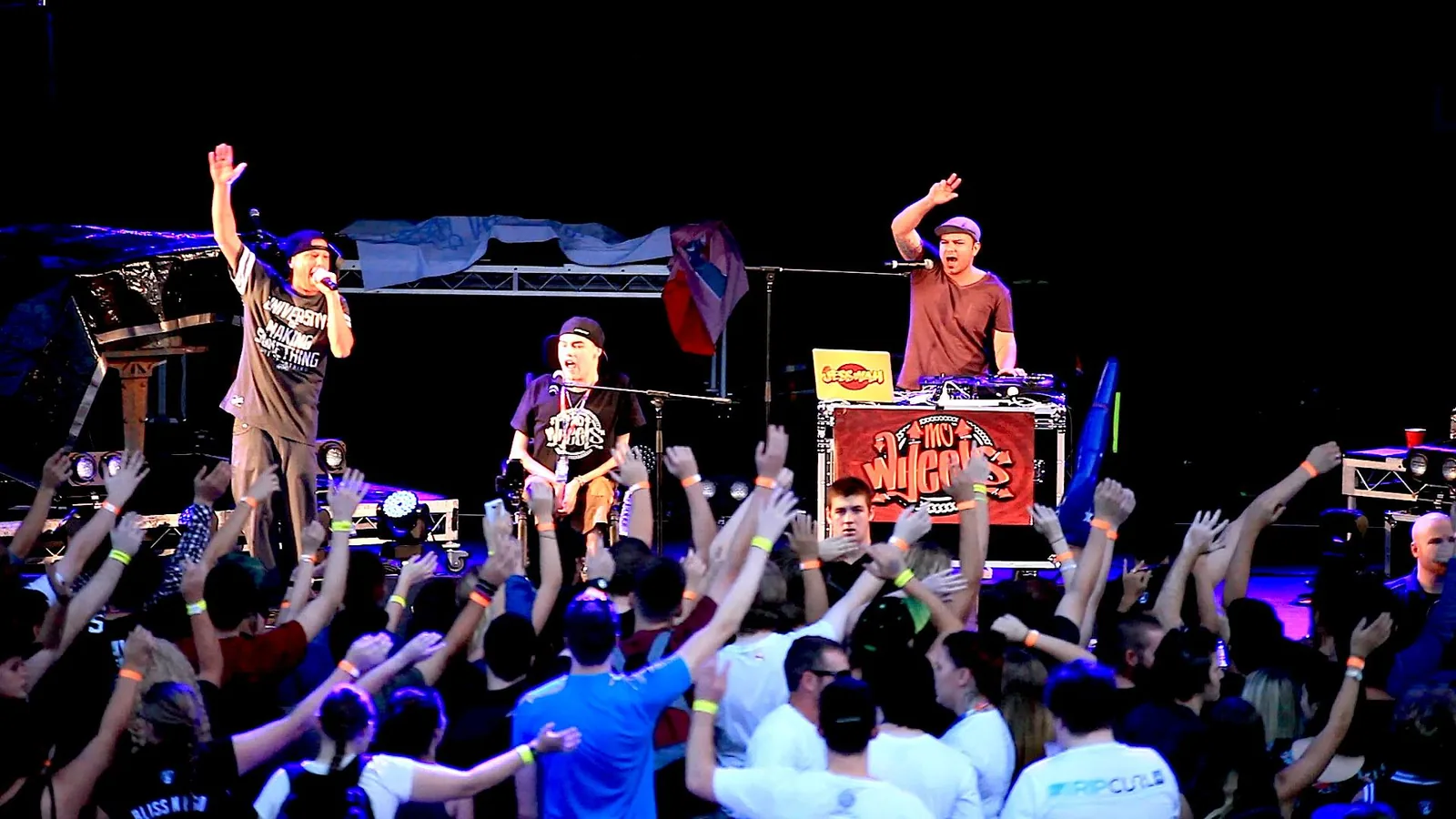
MC Wheels: music, ambition and a performer’s own story
MC Wheels: Can’t Hold Me Back
By Nathan Tessman · Originally published 18 January 2017
Original article
When I got into rap music I was nervous what the public would think of me. I didn’t know a lot of wheelchair-using rappers and I wanted to change that. At certain gigs I often wondered if the audience would see me as a charity case. Just given a go because of my condition. But I had a fire that was burning to prove people wrong and show I’m a serious contender.
My name is Nathan Tessman and am a rap artist known as MC Wheels. I suffer from a rare condition called Spinal Muscular Atrophy with Respiratory Distress [SMARD]. I have been lucky enough that the respiratory distress part of my condition hasn’t affected my breathing. If anything, by playing music my breathing has improved.
[Clickability update, October 2026:
This is the author’s observation, not clinical treatment advice. Discuss respiratory concerns with the treating health team. Music participation and medical care have different roles.
]
I was first introduced to music in 2010 by Roger Kitson from Live Life Productions when I was learning percussion. However, with my limited arm and body strength, I realised that I was perhaps better suited to song writing and singing. After writing my first song I felt this wave of accomplishment that I just had to keep riding.
The other member of Live Life Productions was Lenny Seberry who filming me in the hopes of making a documentary. But more on that later.
I worked on enough songs that year to create my first EP, which was released in 2011. With the feedback I got, with people saying how much they enjoyed my music, we decided to make my debut album, My Introduction.
On this journey I met some amazing people who had a great hand in creating my album as well improving my stage performance. DJ Jesswah is my DJ and also produces most of my beats. PJ is my hype man and helps me with back ups on stage and mentors me with writing.
In 2012 I had the chance to perform for five minutes on the main stage at Sprung Hip Hop Festival. I performed in front of several thousand people, which was an awesome moment in my life.
With the release of my album in 2013, we went gig crazy to promote it. One of my favourite gigs that year was opening a show for Mantra. We rocked the house down and he was impressed by my music. It meant a lot.
Later the same year, Live Life Productions released the doco they had been filming over the past few years. They called it MC Wheels Magic of Life. Simply put, it is a documentary about my life and how music has impacted me greatly – and how I proved I’m a contender, despite my condition.
In 2014 I supported Bliss N Eso at the River Stage in Brisbane on their Circus Under the Stars tour. This was definitely the best gig I’ve been a part of. I’m a huge Bliss N Eso fan, so it was a dream come true. Early 2015 I was also invited to perform at The Big Pineapple Festival. I felt this was a huge achievement as it’s rare to be invited to a festival with such limited experience under the belt.
And now? I am working on my second album, Dark Side of Happiness, which will be released in early 2017.
The simple message I want to convey to people is that if you have a dream, no matter what it is, go for it. Work for it. No excuses. You never know where your dreams can take you.
[Clickability update, October 2026:
People have different energy, support and access circumstances. A setback or a decision not to perform is not a failure of effort. Support should follow the person’s own goals.
Choose the creative role and support that suit you
You might want to write, perform, produce or simply enjoy music. Ask venues about access, sound checks, toilets, rest spaces and timing. Decide how you want to be introduced and what personal information you want to share. Rights standards support individual choice and privacy.
Support the artist’s goal without promising a career outcome
Agree the practical tasks you can assist with and the boundaries of your role. Obtain permission before promoting the person’s story. Keep ordinary instruments, music production and ticket costs separate from eligible disability assistance; NDIS exclusions cover these ordinary creative expenses.
Questions readers ask
Does this story show music is a treatment?
No. It is a personal creative account, not evidence of medical effectiveness.
Find assistance for the creative activities you choose
Describe the practical support you need through Clickability’s matching service and compare providers who will work around your goals.