By Dr Alicia Kennedy · Originally published 7 February 2018
Original article
Dr Alicia Kennedy is a human animal bond veterinarian and founder of the unique, award winning veterinary service, Cherished Pets Community Veterinary Care. Margot and Rob were referred to Cherished Pets about 18 months ago given the advancing age of Dessie and Benji.
Those of us who are blessed to have pets in our lives understand just how much they can enhance our health and well-being. They get us out of bed with their loyal, smooching faces, eagerly urging us to either feed, play, or cuddle; they keep us company through good and bad times, connect us, and make us feel good about ourselves and those around us.
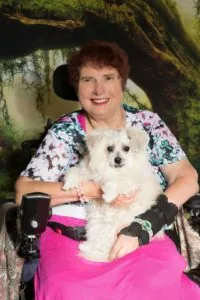
Margot Harpur is someone who knows just how much pets can enrich our lives. She has had Multiple Sclerosis for 44 years, 22 of which have been spent in a wheelchair. For her, “a house is not a home without a fur family member.”
Margot’s Story
“As a young girl I desperately wanted a dog and begged for one constantly, but had to wait until my mother felt I was responsible enough,” she said. “When I was eight, I think, Mum fell in love with this Border Collie x Foxy puppy and brought him home. He was the smartest dog and we named him Tamby. Tamby was always with me. He always had a slimy ball in his mouth but wouldn’t drop it, instead demanding I fish it out and throw it.”
Margot and her husband Rob have had dogs since they first married 34 years ago. Margot explains, “Our first dogs Hidee (because she hid a lot) and Roxy were Keeshonds (or Dutch barge dogs). After we sadly had to have Roxy euthanised, we got Dessie, our little Lhasa Apso x Pomeranian girl. We then found her brother Benji and added him to the family. Cats also seem to find my soft spot as I have rescued three to date. The last one, Rikki, is kingpin in this home.
“We moved to the Bellarine eleven years ago, and after our daughter’s relationship failed we agreed to take her dog Diesal, a very handsome Staffy x Red Heeler, for six months. That holiday has, by mutual agreement, grown to six years now.”
The Power of Pets
Sadly, Benji fell heavily and damaged his spine last year, and as his condition deteriorated, the difficult decision was made to euthanise him. But Margot will always remember the impact he had on her.
“Benji always jumped on me for a cuddle when I was feeling down and when I was sitting in my wheelchair he would edge closer by jumping in a chair near me, preparing to go further. I would help him in the later years by driving close to him. Diesal also knows just when to jostle my arm for a pat and moves from room to room when I do, not letting me out of his sight. When he thinks it’s time for a walk he comes to me to get Rob into action. On nice days I go with them to a local park and we all have fun. Rob and I believe that our animals are family and we love them unconditionally as they do us.”
At Cherished Pets, we witness every day just how important pets are in the lives of people, of all abilitiies, and especially for people living with a disability. Just the very presence of a companion pet can literally be the reason a person gets motivated to get going every day. They provide company, joy, unconditional love and loyal friendship. They motivate us to connect with others and to look after ourselves.
Clickability editorial update: October 2026
Consider the companionship you want and the care involved
A pet may be important to your routine and relationships. Think about the animal’s needs, the tasks involved and what help would be required if your circumstances changed. You can value companionship without treating pet ownership as a responsibility everyone should take on.
Plan practical help without assuming the pet can provide care
Ask what the person enjoys about their animal and what assistance they want with routines. Discuss veterinary care and contingency arrangements with the relevant people. Do not assume companionship replaces personal assistance, clinical care or human connection.
Respect the person’s choices and recognise that losing an animal can matter deeply. Healthdirect grief information offers general context. The contributor’s story can open a conversation while remaining distinct from treatment advice or a promise that a pet will improve wellbeing.
Questions readers ask
Is a companion pet automatically an NDIS-funded assistance animal?
No. Assistance animals have different roles and requirements. Official guidance
Does the story prove pets help everyone in the same way?
No. It describes individual experiences.
Find assistance for the routines that matter to you
Tell Clickability about your daily support needs. Compare reviewed and rated providers and discuss the practical help you want.