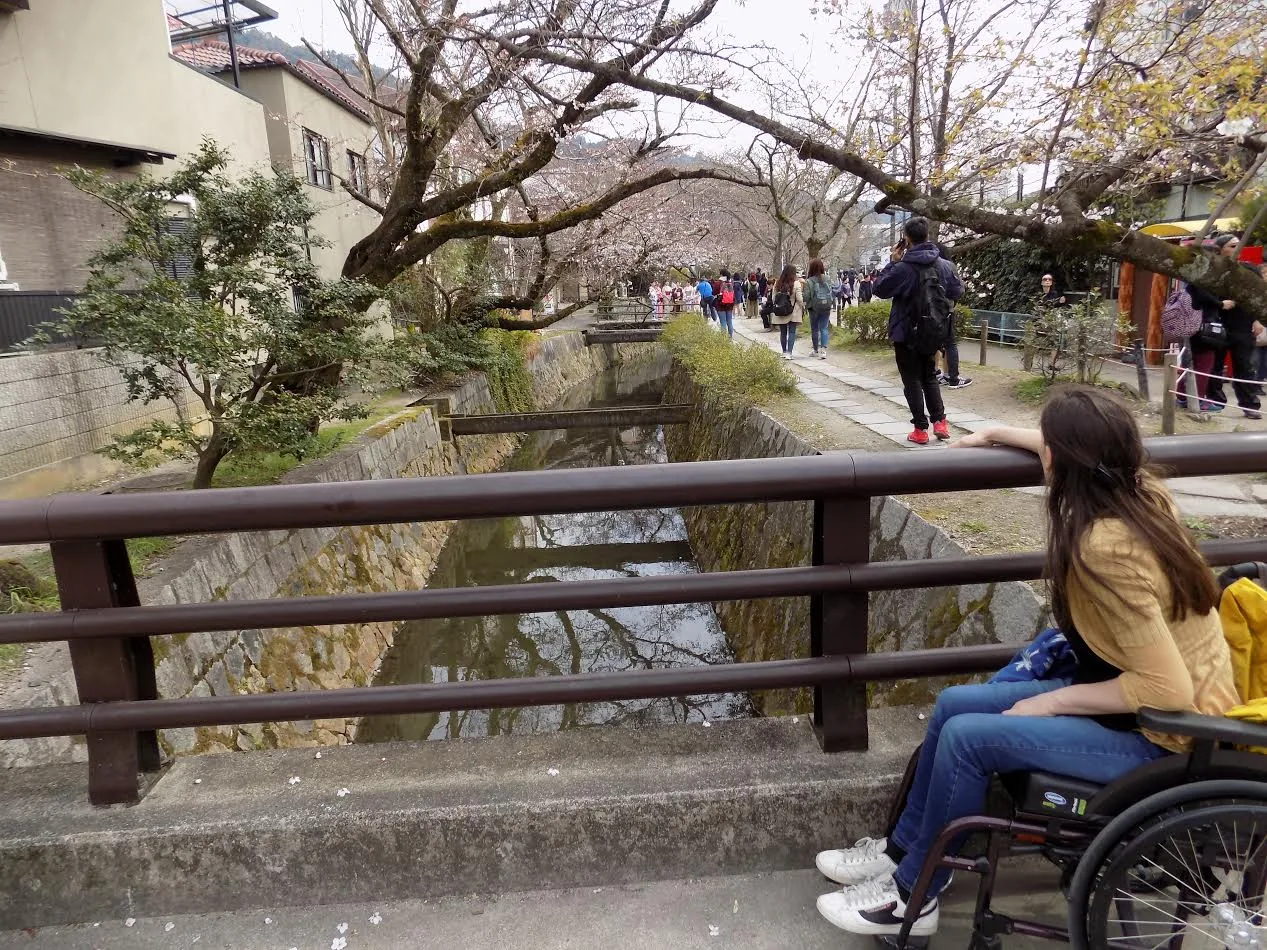
Wheelchair travel and peer reviews: Susie’s experience
You think a broken down bus is a travel challenge? Try traveling in a wheelchair!
By Susie · Originally published 31 May 2017
Original article
Susie is the founder and CEO of Wheelchair World, which gathers travel reviews and resources from wheelchair users. The site now covers 90+ countries, providing information on accommodation, travel agencies, day trips and more! You can also follow Wheelchair World on Facebook or Twitter.
My name is Susie and I’ve been a full-time wheelchair user for four years now. I’m partially sighted and I’ve pretty much lost the use of my left hand. Being left-handed, it means I can’t write – no postcards from me! My voice regularly stops working too, so no long phone calls either. But do you think that’s enough to stop me traveling? Think again!
I’ve always loved traveling and I know that being prepared for anything, accepting of everything and daunted by nothing is a vital attitude when you’re looking for a positive traveling experience. Obviously traveling is much more difficult now and I need an awful lot more information as well as a level of planning that would be admired by the Queen’s security forces!
But with the help of information and reviews from other wheelchair users, I have a much better idea of the destination I’m planning to visit – where to stay, where to eat, where to see. (For instance, this is why I founded Wheelchair World.)
My first trip in a wheelchair was to Barbados. I was quite fortunate because Barbados has some dropped curbs and some disabled toilets. However, the most useful information I gained while there was from another wheelchair user who told me that he is able to go swimming in the sea everyday – the lifeguards on the beach will carry you across the sand, bring you back when you need to leave and keep an eye on your wheelchair for you. This was massively useful to learn and I was able to go to the beach and in the sea!
[Clickability update, October 2026: This describes Susie’s historical experience, not a current service promise or safe-transfer instruction. Confirm suitable assistance, equipment and local arrangements before relying on this account.]
There is so much information out there from other wheelchair users and I love being inspired by other people’s experiences. Every time I travel, I find new information that I wish I had seen before my previous trip.
Being able to travel allows me to continue doing one of my great passions and gives me a new perspective on how to travel. I am able to use the experiences of travel that I had before I became a wheelchair user to help me now that I am a wheelchair user. It is a complete new challenge and requires a whole other level of planning but it also gives you a different level of engagement with the local people and I have found that I have had some wonderful experiences with strangers helping me, all over the world.
Accessibility is becoming more and more common but it is still an uphill battle. It is really important to share our experiences, both positive and negative, so that we wheelchair users can learn from each other, support each other travel more and then the travel industry will learn from us and create more and more accessible places that are truly enjoyable to the wheelchair-using traveler and to everybody else!
Clickability editorial update: October 2026
Use another traveller’s experience to ask better questions
A review may highlight a useful feature or a problem you had not considered. Check its date and ask whether the reviewer’s access needs match yours. Confirm important details directly, including routes, bathrooms, equipment and the assistance available.
Smartraveller disability travel information provides a planning starting point. Keep any agreed support arrangements clear and have a way to communicate if something changes. Peer information is valuable context, not a guarantee that the same help will be available to you.
Agree assistance instead of relying on strangers to fill the gap
Discuss the participant’s preferred help, equipment handling and what to do if an access arrangement fails. Confirm the role and practical arrangements with the relevant operators. Do not assume a lifeguard, hotel employee or passer-by can provide a suitable transfer.
Use the Code of Conduct for safe, respectful assistance. Ask before helping and stay within your training. The person should not have to accept an improvised arrangement simply to maintain a positive travel attitude.
Questions readers ask
Does a peer review guarantee current access?
No. Confirm details with the operator.
Should the historical carrying example be used as a transfer instruction?
No. Arrange assistance suited to the person and equipment.
Find assistance for the journey you want to make
Tell Clickability about your travel-support needs. Compare reviewed and rated providers and discuss the arrangements your trip requires.