DSC NDIS Conference 2026: sessions and reform takeaways
NDIS Conference 2026: Top topics from pricing support to providers and bill legislation
By Clickability · Originally published 24 August 2026
Original article and dated context
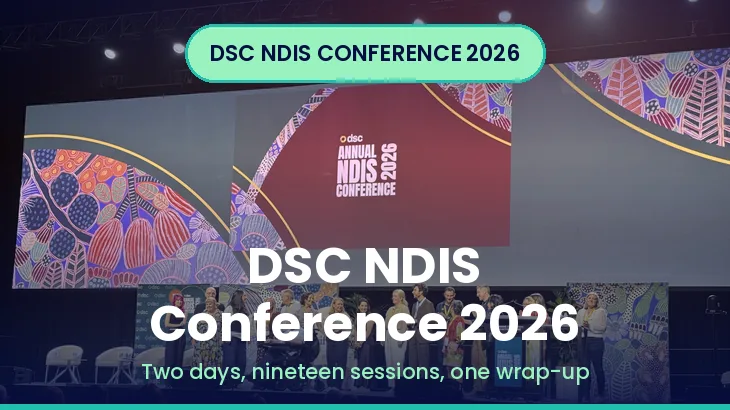
DSC NDIS Conference 2026: the whole two days, in one place
Two days, nineteen sessions, and a sector staring down the biggest change since the NDIS began. We sat through the lot and wrote up every talk in plain English, so whether you're a provider, a participant, a family member or a support coordinator, you can find what matters to you. This page pulls it together: the themes that ran through everything, our headline takeaways, and links to every session.
If there was one line that captured the mood, it came from DSC's Brent, quoted in the closing reflection: if the last few years of reform were waves, this is a tsunami, and no one, no participant, no intermediary and no provider, will be left untouched. But the conference worked hard to leave people with momentum rather than dread, and it largely succeeded.
[Clickability update, October 2026: The current phased planning timetable starts in April 2027. Future functional-capacity access changes are separate. Modelling of a smaller scheme is a projection, not a finding that an identified participant will lose access.]
The themes that ran through everything
Reform is real, and it bites in 2027–28. From the NDIA's Scott McNaughton to Performl's modelling, the timeline came into focus: new framework planning and support-needs assessments from April next year, functional-capacity-based access from 2028, and Treasury projections of a scheme roughly a third smaller than it would otherwise be by 2031. The status quo and reform paths look identical until mid-2027, then diverge fast.
Control what you can control. This was the most repeated piece of advice, from the "what should providers do now" panel to the Avivo and CLO leaders. Stop pouring energy into outcomes you can't control (like waiting for a better price review), and act on what you can: your risk appetite, your operating model, your quality, your people. As one leader put it, if you were starting an organisation in today's context, how would you build it, and what are you carrying that no longer fits?
Quality and sustainability are the same thing. CLO's Mel Kubisa said it plainly, quality is sustainability and sustainability is quality, and Avivo showed what it looks like to make hard structural decisions transparently while protecting culture and joy.
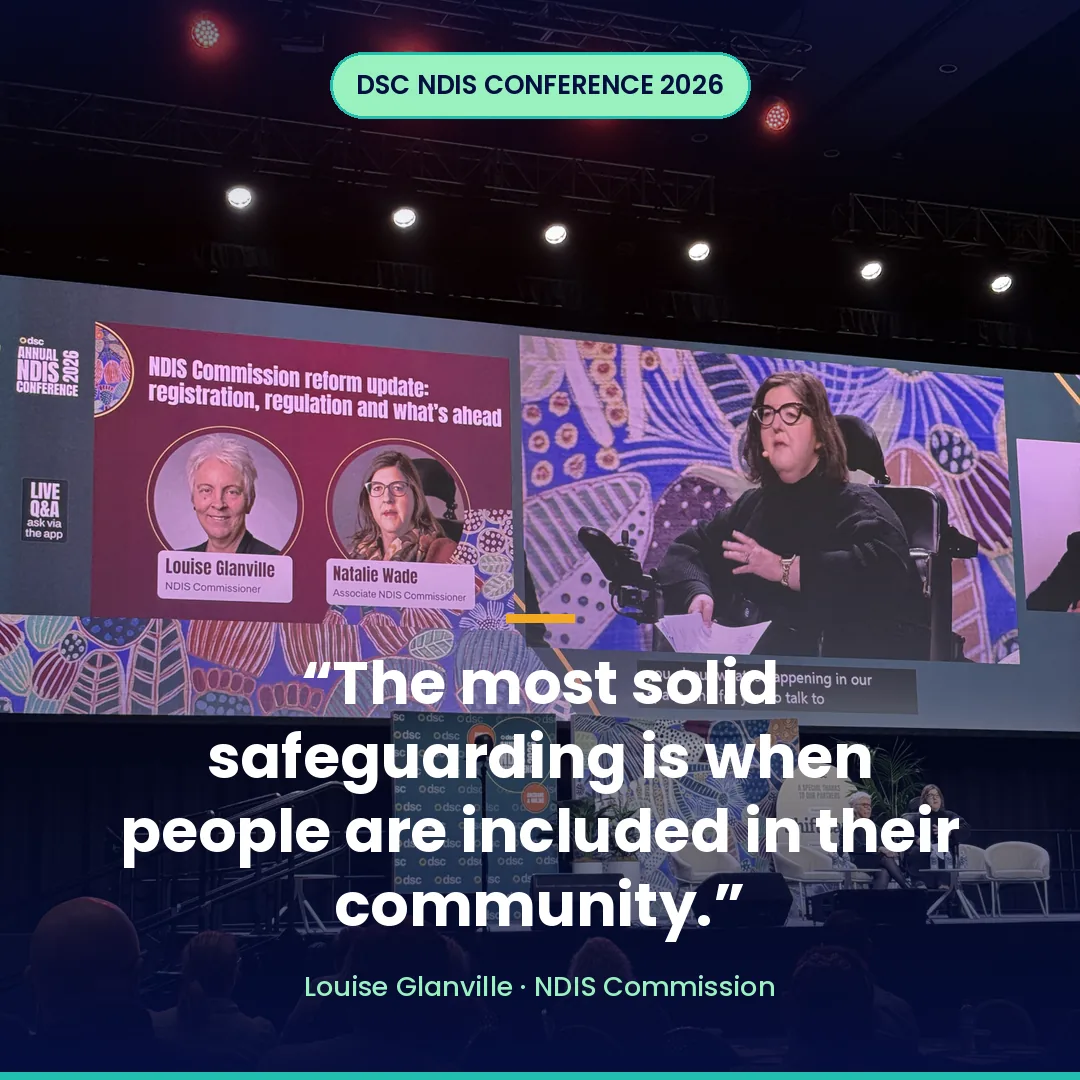
Safeguarding is sharpening. Both the NDIA and the NDIS Commission were unusually candid about unscrupulous providers exploiting vulnerable people, and about stronger enforcement ahead, record penalties, new banning powers, and 2026–27 priorities that include governance failures in high-risk settings. Good providers should welcome the clean-out.
The narrative, and the data. The media panel argued the NDIS isn't broken but the way we talk about it is, and made a call the whole conference echoed: measure and publish your impact, and tell real stories. Data ran as a thread from the modelling session to the AI tools session, all pointing the same way, evidence is now the sector's most under-used asset.
Kids and early childhood get a reset. Thriving Kids was the hopeful bookend: no diagnosis needed to get help, parents at the centre, and support where children live, learn and play. The modelling made the stakes clear, children (especially those with autism and developmental delay) make up most projected exits from the scheme, so getting Thriving Kids right matters enormously.
The care economy is converging. Disability, aged care and veterans' care are slowly aligning behind shared worker checks, standards and registration, "report once, use often." More opportunity, more competition, and a premium on partnership skills.
Workforce and fair work. The Fair Work Ombudsman put providers on notice as employers in a high-risk sector, while leaders across the two days stressed that valued, well-supported frontline staff are the foundation of both quality and sustainability.
Inclusion isn't optional. From Miwatj Health on culturally safe support for Yolŋu participants, to the case for people with intellectual disability in governance, to expanding real employment, the human-rights thread held: nothing about us without us, at every level.
The closing reflection: how to stay optimistic
DSC's Roland Naufal and Evie Naufal closed with an honest father-and-daughter conversation about the hardest question of the two days: how do you stay optimistic when the momentum has turned negative? Their answers drew the threads together. Hold the reality and the joy at once, as Avivo's Kate Fulton urged, it can be grim, and there can still be joy in the work. Look after yourself well enough to look after your team, echoing Inclusion Australia's Maeve Kennedy. Lean on collegiality, because a problem shared is a problem halved. Get serious about data and measuring impact. And keep learning and adapting, because, as the reflection put it, the people in that room are the survivors, they've adapted through 13 years of change and will again. The conference ended, fittingly, with a celebration, artwork, thanks, and a room that had stayed to the very end because it came to learn.
[Clickability update, October 2026: The August statement that existing settings hold until the law changes needs this update: the 2026 Act has passed. Different changes have different implementation dates; passage is not simultaneous implementation.]
Our overall takeaways for each audience
If you're a provider: get deliberate. Set an explicit risk appetite, treat quality and viability as one goal, get your governance and award compliance in order, plan for support-needs assessments from April, and decide where you'll play as the care economy converges. Document your outcomes, because evidence is now your best advocacy and your best marketing.
If you're a participant or family member: there's real reassurance in the detail, children with high or permanent needs stay in the NDIS, existing settings hold until the law changes, and there are new protections and pathways. Thriving Kids is a genuine step forward for young children. And your voice and your story carry more weight in this debate than you might think.
If you're a support coordinator, LAC or intermediary: the value of clear navigation goes up as the system gets more complex, functional-capacity assessments, funding periods, care-economy hand-offs, and protected supports that are hard to protect in practice. Knowing which providers are sustainable, well-governed and genuinely inclusive is worth a lot to the people you support.
We'll be watching how the reforms land, and we'll keep translating the detail into plain English. For now, dive into whichever sessions matter most to you below.
Day 1: Thursday 13th August
We have full coverage of all the sessions from Day 1 below:
If you're looking for a quick summary of each individual talk, I've summarised the key points below, grouped by who they're most useful for, so you can jump straight to what's relevant to you and read more on the sessions that matter.
For participants, families and self-advocates
The sessions most directly about everyday life: raising a child with disability, finding real work, and getting support that respects who you are. Start here if you're a participant, a family member or an advocate.
NDIS Thriving Kids: How Early Childhood Support Is Being Rebuilt for Families This is the most hopeful news for families in years. The architects of the model, Frank Oberklaid, Jill Hellemans and Sylvana Mahmic, explained how Thriving Kids rebuilds early childhood support: no diagnosis needed, parents at the centre, and help delivered where children live, learn and play. Here's exactly what it means for families, providers and educators.
[Clickability update, October 2026: The short NDIA session description below incorrectly places new planning in 2028. Use the current planning framework for its April 2027 start. The separate funding reset has its own timing and safeguards.]
What the reforms mean for your plan and your access
How the changes could affect your eligibility, your plan and your funding, and when. Essential for participants and families, and just as useful for the coordinators and providers who support them.
NDIS Reforms 2026: What's Changed, What's Coming, and What It Means for You The NDIS is changing fast, and this session cut through the noise. Sara Gingold and Todd Winther unpacked what's already law, what's still stuck in Parliament, and what it means for your plan or your business. From new framework planning to functional capacity testing, here's your plain-English guide to the NDIS reforms reshaping the scheme, and the timelines you actually need to watch.
How NDIS Access Is Changing: Inside the New Functional Capacity Assessment The way NDIS access is assessed is about to change, and this is the group designing how. Co-chairs Christine Imms and Mary Wood, with Dr George Taleporos, explained how 'substantially reduced functional capacity' will be judged from 2028. If you want to understand the new functional capacity assessment and have your say before it lands, start here.
NDIS 2031: Who Stays, Who Goes, and What the Modelling Reveals What does the NDIS look like in 2031 if the reforms pass? Performl's Loki Ball shared sobering NDIS reform modelling: a scheme a third smaller, 346,000 fewer participants (mostly children), yet larger average plans for those who remain. Essential reading for any provider deciding where to place their bets over the next five years.
Inside the NDIA: Scott McNaughton on Reform, Wait Times and Dodgy Providers A remarkably candid session from the NDIA's Scott McNaughton: an apology for blown-out wait times, the story of the recovery, and the NDIS reform timeline for new planning and support-needs assessments from 2028. Plus a raw account of the fight against unscrupulous providers exploiting vulnerable participants, and what the agency is doing to stop them.
For providers: strategy, leadership and sustainability
For anyone running or leading a disability organisation through the reforms: where the market is heading, and how to stay viable and lead well without losing your purpose.
NDIS Allied Health Reform: How Providers Can Survive (and Thrive) as Pricing Shifts Therapy hours are shrinking and the market is consolidating, but it's not all bad news. Trystan Conway, Sam Boag and Jaimee Dutton laid out how providers can survive and thrive through allied health reform: rethinking service models, widening referrals, and getting registered before it's mandatory. Blunt, practical, and essential if therapy is your business.
The Care Economy Is Aligning: What NDIS Providers Need to Do Now A huge shift is happening in the background. Sam Thorp and Angela Poon explained how disability, aged care and veterans' care are converging into one care economy, with shared worker checks, standards and registration. More opportunity, more competition, and a clear playbook for positioning your organisation before it lands.
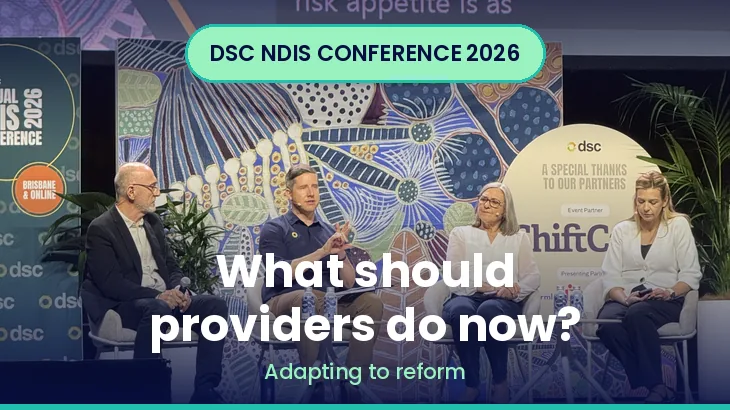
NDIS Provider Strategy: What Every Organisation Should Be Doing Right Now If recent reforms were waves, this round is a tsunami, so what should providers actually do? Ann Drieberg, Natarsha Warren and Rob Woolley gave blunt answers on NDIS provider strategy: stop saying yes to everything, start with the person not the payer, and put your frontline at the centre. The most practical hour of the conference.
Disability Sector Leadership: How to Stay Steady Through NDIS Reform How do you lead when you don't have the answers? Journalist Leigh Sales asked four sector leaders exactly that. Their honest take on disability sector leadership in hard times: name that it's tough, keep the frontline focused on quality, share power with allies, and lead with kindness and grace. A steadying, human take on leading through reform.
What the regulators now expect, how your organisation is being measured, and how to get your governance, workforce and safeguarding right. Aimed at providers, boards and employers.
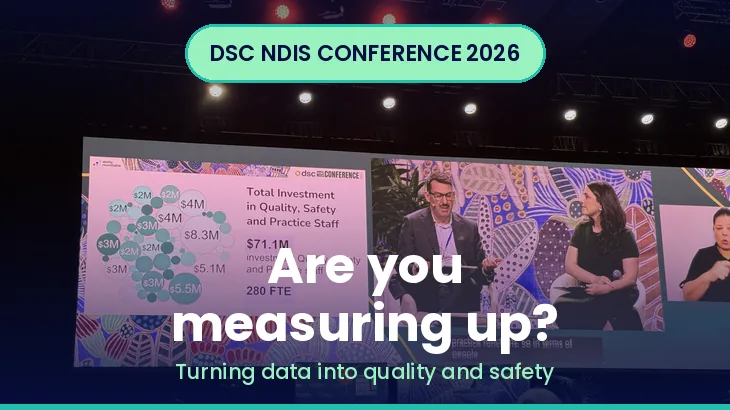
The NDIS Safeguarding Benchmark: How Does Your Organisation Really Compare? How does your organisation really compare on quality and safety? Evie Naufal and Garry Simpson revealed findings from the sector's largest NDIS safeguarding benchmark, covering board representation, incident reporting and worker screening. The data is confronting in places, but it's the clearest picture yet of what good looks like, and where most providers still quietly fall short.
NDIS Registration and Enforcement: What the Commission Expects of You Next The regulator is growing teeth. Commissioner Louise Glanville and Natalie Wade walked through the NDIS registration changes, record penalties, new banning powers, and 2026-27 priorities that now include governance failures. If you deliver SIL or high-risk supports, here's exactly what the Commission expects of you next.
Fair Work Is Watching: What the SCHADS Award Inquiry Means for NDIS Providers The Fair Work Ombudsman just put disability providers on notice. Anna Booth explained why the sector is high-risk and what her inquiry is finding: award mistakes, stretched workers and unpaid-time creep. If you employ support workers, get your SCHADS award compliance right before the tougher enforcement phase begins in 2028.
How your organisation shows up, online, in AI answers and in the public conversation, and how to make technology work for you. Useful for anyone in marketing, communications or leadership.
AI for NDIS Providers: Practical Tools You Can Actually Use Today Forget the hype, this was AI you can use on Monday. Sam Paior and Evie Naufal shared real ways disability services are saving time with AI tools for NDIS providers, from faster case notes to custom assistants, plus the privacy and governance guardrails you can't skip. If 'shadow AI' is already happening in your organisation, read this first.
NDIS Website Accessibility: Why Yours May Be Failing People and AI Search Is your website quietly turning people away, and hiding you from AI search? Tom Davis and Ann Drieberg tested five NDIS provider sites, and not one passed for humans or machines. Discover why NDIS website accessibility and plain language are now the same problem, and the simple fixes that solve both at once, for people and machines alike.
NDIS on Trial: The Fraud Narrative and Who's Really Telling the Story 'The NDIS isn't broken, but the way we talk about it is.' Journalist Paul Barry hosted a fiery panel, with Senator Jordon Steele-John and others, on the NDIS fraud narrative and who really controls it. A frank, occasionally funny look at the media war over the scheme, and how providers can help tell the real story, and why it matters for the whole sector.
That's our rundown of the biggest ideas, changes and debates from the DSC Annual NDIS Conference 2026. At Clickability, we're all about helping participants, families and providers cut through the noise and find what's right for them, and there's plenty in these reforms still to talk through. We'd love to hear what stood out to you, and what you think it means for the people you support.
Keep the conversation going: follow Clickability on LinkedIn, Facebook, Instagram and X, and share this wrap-up with anyone in your network who would find it useful.
A note on this series: this is Clickability's plain-English summary of sessions at the DSC Annual NDIS Conference 2026, based on notes and recordings from the event (13 and 14 August 2026). It reflects our interpretation and is not the official position of DSC, the speakers, their organisations or the NDIA, and it is not legal, financial or NDIS advice. Reform details and timelines depend on legislation and may change, so please check current requirements before acting on anything here.
Clickability editorial update: October 2026
Choose the session that answers your immediate question
If you are trying to understand a letter about your plan, begin with the reform and NDIA sessions. If the question concerns a child’s help, start with early childhood. Use the full linked article and its editorial review; a short conference headline cannot explain every exception.
Write down the issue you need resolved and the source of the proposed change. Then ask your NDIS contact how it relates to your own arrangement. The conference offers context and different viewpoints; it does not replace an individual plan notice or access decision.
Turn the conference index into a focused work list
Choose the sessions that fit the services you deliver and the risks your participants face. A therapy practice, a SIL provider and a communications team need different priorities. For each relevant topic, identify a practical action and the current source that governs it.
Keep a distinction between a useful idea, a prediction and an obligation. Measure the effect of a change on participant experience rather than treating attendance or a new policy document as proof of improvement. Revisit the linked articles when preparing a service decision, since the hub deliberately summarises a broad programme.
Questions readers ask
Does the conference summary establish current legal requirements?
No. It reports event views and forecasts; use the linked current official guidance for requirements. Official guidance
Are new planning and access changes scheduled for the same year?
They are separate reforms with different timetables. The planning date in one short session description is corrected above. Official guidance
Does modelling identify who will personally leave the NDIS?
No. A projection is not an individual access decision.
Find support for the priorities you identified
Use Clickability to describe your service needs after exploring the sessions. Compare reviewed and rated provider profiles and confirm the practical fit.