Thomas is a student at the University of Queensland, studying Laws and Commerce. He is a keen sports watcher (and occasional player). He is allegedly disabled however the jury is still yet to decide on that matter. You can read his blog here.
As a society, it can be said that we don’t know what we love most until it is no longer within reach. With COVID-19 shutting down basically every facet of physical life, many of these things have suddenly been taken away from us, and it becomes apparent how much we relied on them for our own happiness and well-being.
Right now, it’s powerchair football I have been craving most. It would be a fair assessment to say I was not previously a very social person prior to COVID-19; however, with the new normal requiring virtually no physical contact with others, I found myself without my predominant connection with others. Without it, I’m reverting back to how I was prior to joining a powerchair football club.
I suppose at this point, a bit of context is required. I grew up in Central Queensland. If we limit the population to the small section known as “young people with a neuromuscular disability”, it suddenly becomes a barren wasteland where you’re almost on your own… rather reminiscent of our current situation.
It follows then that, if there are few people similar to me, there would be limited access to services specific to that demographic. Social sport is a prime example of this.
I would be grossly negligent now not to mention that I had very little choice in whether or not I played powerchair football on my inevitable arrival to the great city of Brisbane. To say I was ‘peer pressured’ by my mates in Brisbane would be an understatement. That said, I am a giant sports fanatic and I was already hooked when the topic was brought up anyway.
Whilst my move to Brisbane was primarily for educational purposes, I have now played a full season of the greatest sport on the planet. I’ve now got a vast connection of friends (without which I would not be writing this post) and have a place to put my competitive instincts and love for sport into a constructive use.
Whilst I haven’t been particularly successful at this time, I am now a part of a team and have even had the good fortune to play powerchair football at the national level. I can thoroughly say that powerchair football has become an incredibly important part of my life.
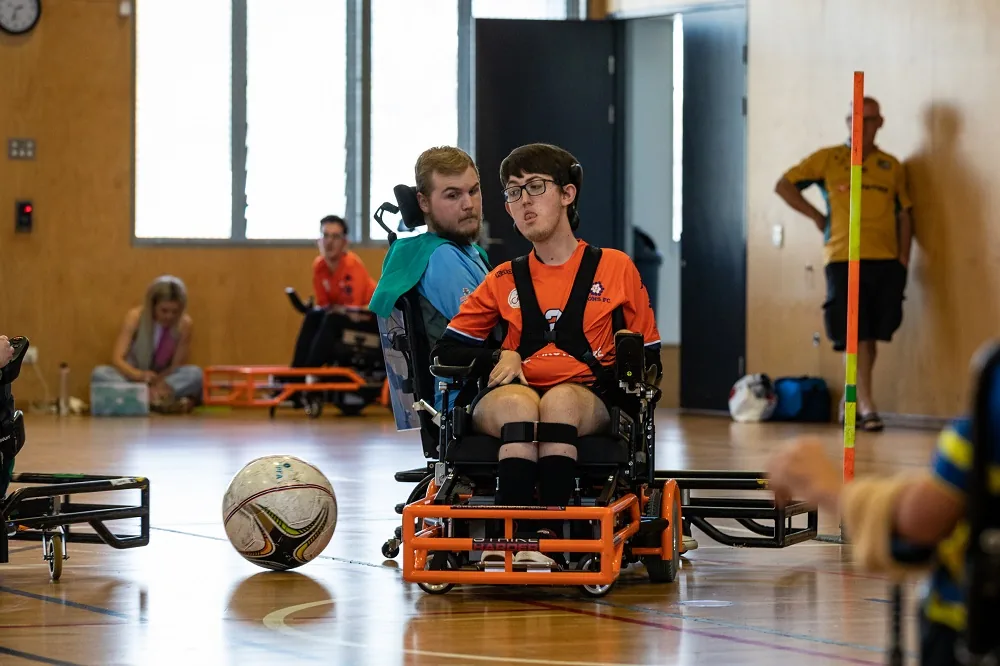
To those who haven’t experienced the thrill of, or even heard of, powerchair football, let me tell you this: There are some skills in life which you will need: teamwork; awareness; quick thinking; patience. Powerchair football builds all of these.
Photo credit: Michelle Coles
It’s the sort of thing that will test you in ways that you haven’t been previously been tested. Not only is it a sport filled with fun, but it is a great self-improvement tool. To get better at powerchair football, one must develop the essential tools to become a greater person in life. That is the effect which this sport has on people.
In order for the post to have some semblance of congruity, allow me to bring us back to the beginning of this post. Powerchair football is more than just a sport, it’s a tool in creating a better version of you – but like many other things right now COVID-19 has put an end to that for the time being.
Because of that I, and many other players across Australia and abroad, am missing what we hold dearest and most: the beautiful game of powerchair football.
Clickability editorial update: October 2026
Look for a club where you can participate on your terms
Thomas values friendship and competition. You may want a different pace or simply a chance to try the sport. Ask a club about introductory sessions, equipment requirements, accessible facilities and who can help with practical arrangements. Explain what you need without assuming every team uses the same setup.
Separate ordinary activity costs from disability-related assistance. Current NDIS support guidance is relevant when checking a proposed support. Consider how you will get home, recharge equipment or manage personal assistance as well as what happens on the court. You can try an activity and decide it is not for you.
Help organise the opportunity without setting the outcome
Ask whether the person wants help contacting the club or planning transport. Do not measure success only by making friends, winning or attending every session. The useful outcome may be testing an interest and learning what arrangements work. Review practical support with the person rather than assuming family members will provide it indefinitely.
Questions readers ask
Does the article show whether a club is running today?
No. Confirm current sessions and access with the club.
Find support for the activities you enjoy
Looking for assistance to join a club or attend an activity? Explain your plans to Clickability and discuss practical duties and access with potential support workers.